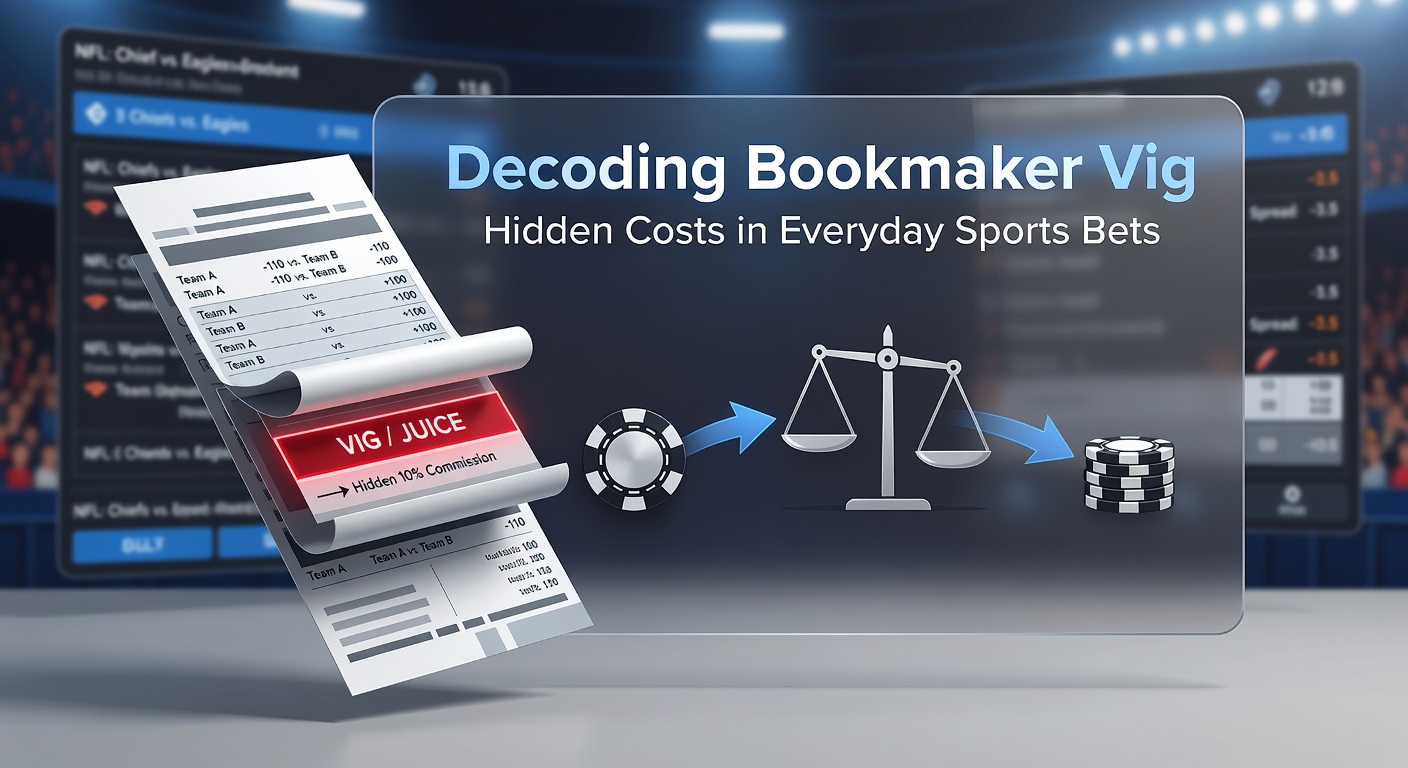
Decoding Bookmaker Vig: Hidden Costs in Everyday Sports Bets
Bookmakers build a commission into every sports bet, a fee known as vig or vigorish that quietly erodes returns even when bettors pick winners, and understanding its mechanics reveals why consistent profits remain elusive for most casual players.
What Exactly is Bookmaker Vig?
Vig represents the bookmaker's edge, embedded directly into the odds offered on sporting events, so instead of mirroring true probabilities, lines carry a built-in margin ensuring the house profits regardless of outcomes; for instance, in a simple two-team matchup like an NFL game, fair odds might sit at even money, but bookmakers adjust them to -110 on both sides, meaning bettors risk $110 to win $100. This setup guarantees the bookmaker collects more in losing wagers than it pays out on winners over time, a principle that dates back to early 20th-century American horse racing where mob-linked bookies first formalized the juice to cover risks and generate steady income.
Experts who analyze betting markets point out that vig varies by sport and market type; data from the UNLV International Gaming Institute reveals average vig hovers around 4.5% for major U.S. sports like basketball and football, while soccer props often push closer to 6-8% because of the added complexity in three-way outcomes. And here's the thing: bettors rarely notice it upfront since it hides in the fractional payout structure, turning what feels like a straightforward wager into a transaction with hidden drag.
Take one common scenario where a punter backs the favorite in an NBA playoff game at -150 odds; that implies a 60% win probability, yet when paired with the underdog at +130, the total implied probability exceeds 100%—specifically 104.76% in this case—leaving the excess as pure bookmaker profit. Researchers who've dissected thousands of lines confirm this overround, as it's called in Europe, consistently delivers the house its cut, whether through American, decimal, or fractional formats.
How Bookmakers Calculate and Adjust Vig
Bookmakers employ sophisticated algorithms and risk models to set initial lines, factoring in public betting percentages, sharp money from professionals, and injury reports, but vig stays constant as the core profit mechanism; they calculate it by converting odds to implied probabilities—say, -110 translates to 52.38% (110/(110+100))—then sum probabilities across outcomes to exceed 100%, with the difference representing the margin. Semicolons link this process to real-time adjustments, where heavy action on one side prompts line moves that maintain the vig without altering the overall edge.
What's interesting about modern operations is how technology amplifies precision; software from firms like Genius Sports feeds live data into pricing engines, ensuring vig adapts to volume—high-liquidity events like the Super Bowl see vig dip to 3-4%, whereas niche props on lower-profile leagues carry 10% or more because fewer bets mean higher risk exposure for the book. Figures from the American Gaming Association indicate that in 2025, U.S. sportsbooks cleared over $14 billion in hold—mostly vig—across $150 billion in wagers, underscoring its scale in everyday betting.
Observers note that vig isn't static; during peak seasons like April's NBA playoffs or golf majors, books tighten spreads on popular markets to attract volume, yet inflate it on alternatives, creating a landscape where savvy bettors hunt for value by comparing across platforms.
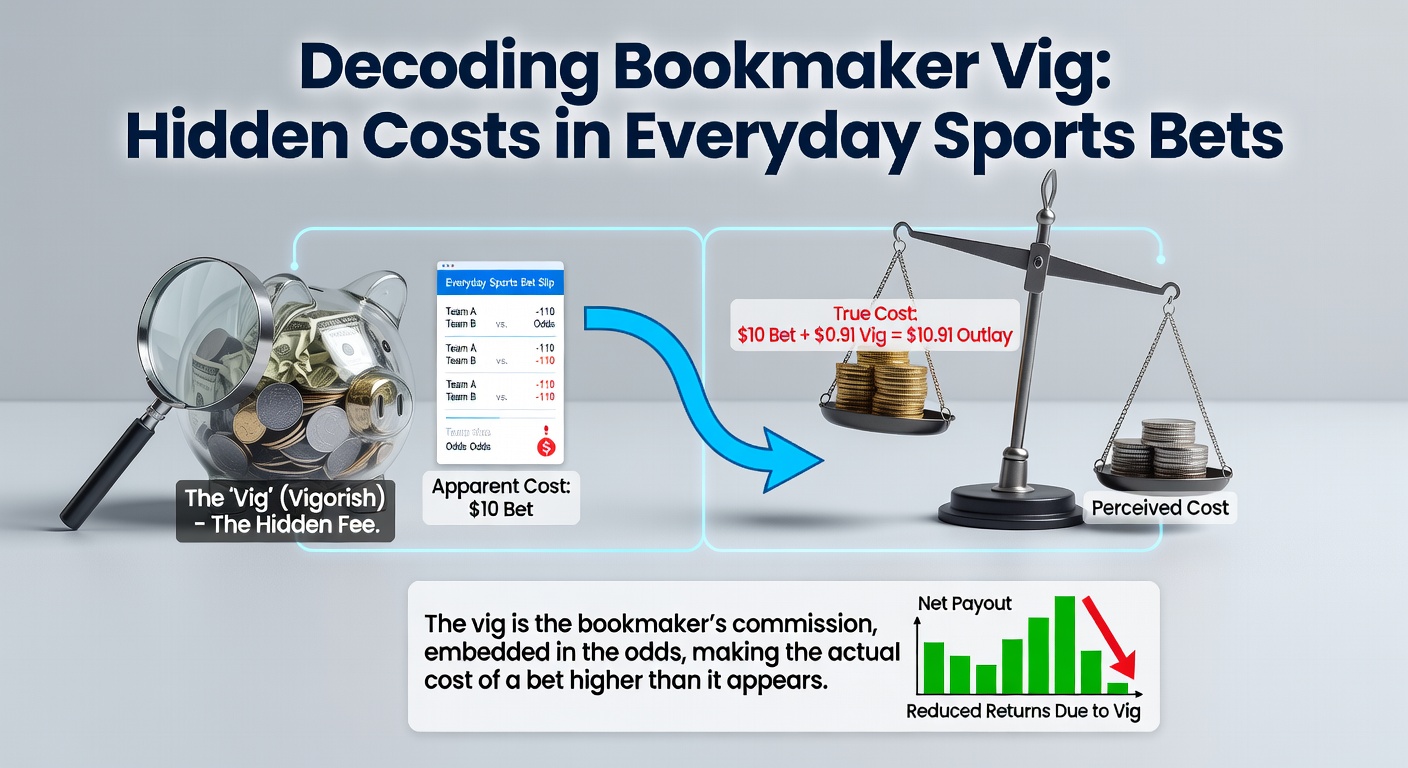
Real-World Examples: Vig in Action Across Sports
Consider a Premier League soccer match between Manchester City and Arsenal; bookmakers list City at -120, draw at +250, and Arsenal at +300, yielding an overround of 105.8%—that's 5.8% vig siphoned off every bet placed, so even perfect foresight on the winner leaves bettors short unless they consistently beat that threshold. But here's where it gets interesting: in moneyline bets, the math demands a 52.4% win rate just to break even at -110 odds, a bar that trips up 95% of recreational players according to long-term tracking data from betting databases.
Shift to baseball, where run lines at -110 mirror NFL point spreads; one study tracking 10,000 MLB games found average vig at 4.76%, but totals (over/under) often creep to 5.2% due to sharper public action, forcing books to protect margins. And in tennis, straightforward two-way markets keep vig lower around 3-4%, yet live betting spikes it to 7% as odds fluctuate wildly mid-match.
People who've pored over historical lines often discover patterns; for example, during the 2024 Olympics, vig on track events averaged 6.2%, higher than team sports because of lopsided favorites, illustrating how event structure dictates the hidden cost. Now, fast-forward to April 2026: with the Masters golf tournament underway, first-round leader markets show vig pushing 8-10% on longshots, as books balance massive public money on stars like Scottie Scheffler against the field's depth.
The Long-Term Impact of Vig on Bettors' Bankrolls
Over hundreds of bets, vig compounds relentlessly, turning a 55% win rate—which sounds solid—into net losses at standard -110 lines since the required breakeven climbs above 52.4%; data from Australian wagering trackers reveals that across 50,000 soccer bets, players facing 5.5% average vig saw their expected value drop 28% below fair odds. Semicolons connect this erosion to psychological traps, where near-misses fuel continued play despite the math stacking against them.
Those who've modeled bankroll trajectories note that low-vig markets like player props or Asian handicaps (often 2-3%) preserve more edge for skilled bettors, yet most everyday wagers stick to high-juice sides; turns out, shopping lines across five books can shave 0.5-1% off vig per bet, compounding to thousands over a season. Experts observing U.S. handle post-PASPA legalization report recreational bettors lose 4-7% of total stakes annually to vig alone, a figure that climbs in volatile markets like college basketball.
It's noteworthy that parlays amplify the pain; a three-leg parlay at -110 each carries over 6.5% vig, ballooning to 15%+ on longer shots, which explains why books promote them aggressively despite the house edge skyrocketing.
Spotting and Minimizing Vig in Daily Bets
Bettors armed with calculators convert odds to no-vig probabilities by dividing implied chances by the overround— for -110/-110, true odds emerge at -105 apiece—revealing true value when lines deviate; apps like OddsJam automate this, but manual checks across platforms expose discrepancies where softer books offer reduced juice. And while promotions like risk-free bets offset initial vig, they come laden with rollover requirements that preserve the house advantage long-term.
Now consider exchange platforms like Betfair, where peer-to-peer trading trims vig to 2-5% via commissions, a model gaining traction in Canada per provincial reports; yet traditional books dominate volume, so hybrid strategies—backing on exchanges, laying on sportsbooks—emerge as vig-beaters for pros. Observers tracking April 2026 NHL playoffs see books drop vig to 4% on puck lines amid competition, rewarding line shoppers who compare in real time.
- Focus on -105 lines or better for standard markets.
- Avoid heavy parlays unless correlated legs boost true odds.
- Hunt middling opportunities where line moves create temporary no-vig edges.
- Track personal win rates against breakeven thresholds per sport.
Such tactics, backed by simulations from gaming math experts, boost sustainability, although vig's persistence underscores why only 1-3% of bettors profit yearly.
Conclusion
Vig remains the silent architect of bookmaker profitability, woven into every quoted line from NFL Sundays to April 2026's Masters leaders, demanding bettors grasp its math to navigate sports wagering effectively; data consistently shows that recognizing and reducing it separates break-even players from consistent losers, while industry evolution—through tech and competition—promises gradual compression without eliminating the edge. Those who decode it gain clarity, turning hidden costs into informed choices amid the daily barrage of odds.