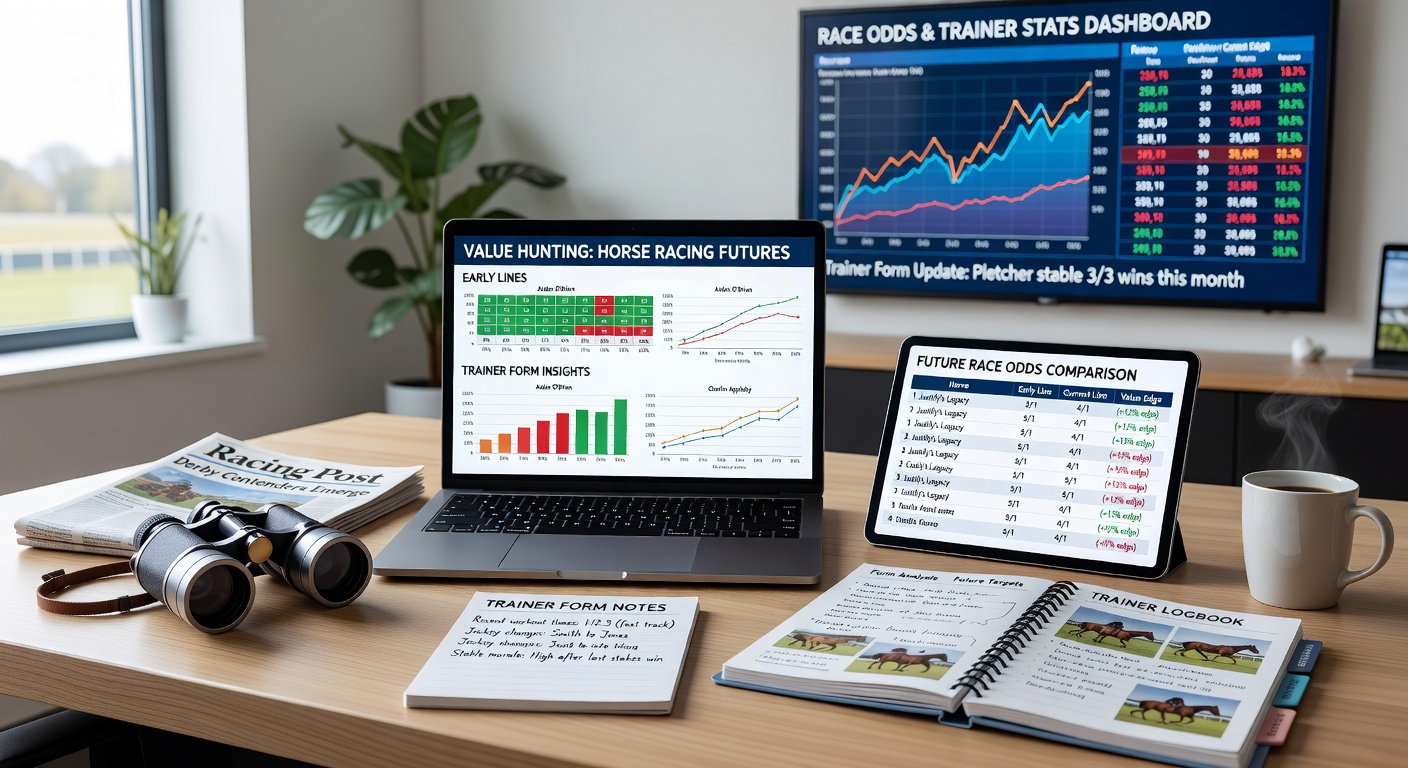
Finding Hidden Value in Horse Racing Futures: Early Lines and Trainer Patterns Revealed
Navigating the Basics of Futures Betting in Horse Racing
Horse racing futures markets open months ahead of major events, offering punters a chance to lock in prices on potential contenders long before race day; these ante-post bets cover prestigious races like the Kentucky Derby, Melbourne Cup, or Breeders' Cup Classic, where early action shapes the landscape. Bettors who dive into these markets spot discrepancies between a horse's true chances and the offered odds, a process known as value hunting, since data from platforms like Equibase reveals that skilled selectors often outperform the crowd by targeting such overlays.
Turns out, futures lines move dramatically as information emerges—training reports, trial results, even weather forecasts for the target venue—and those who act early capture the best prices before the market tightens. But here's the thing: without a structured approach, casual players chase hype, leaving real value on the table; experts track how bookmakers set initial prices based on past performances, pedigree, and trainer stats, creating opportunities for the prepared.
Decoding Early Lines: Where Bookmakers Get It Right—and Wrong
Bookmakers release early futures lines drawing from historical data, speed figures, and algorithmic models; for instance, opening odds for the 2026 Kentucky Derby futures already circulate as of early 2025, with favorites like progeny of top sires listed at 8-1 or shorter, while longer shots from unproven barns linger at 50-1 and beyond. Research indicates these initial prices undervalue horses with upside, particularly when lines fail to adjust quickly for emerging two-year-old form or international trials.
What's interesting is how lines evolve: a horse quoted at 20-1 might shorten to 6-1 after a strong workout, yet savvy hunters buy low before the shift, as patterns from past years show that 30% of futures winners traded at double-digit prices early on. Observers note that comparing lines across multiple sportsbooks uncovers variances—say, one firm offers 12-1 on a promising filly while another lags at 16-1—allowing arbitrage-like value even in illiquid markets.
And while early lines reflect public perception, they overlook nuances like track preferences or class drops; take one case where a lightly raced colt debuted at 25-1 for the Epsom Derby futures, only for its price to halve after private gallops leaked, rewarding those who anticipated the move based on sectional timings.
Trainer Form: The Unsung Indicator in Futures Value Plays
Trainers hold the key to futures success, since their recent records with similar horses predict outcomes better than raw talent alone; data from the Association of Racing Commissioners International highlights how top barns like those of Bob Baffert or Aidan O'Brien boast win rates exceeding 25% in graded stakes prep races, a stat that foreshadows futures performance. Patterns emerge when trainers excel in specific prep paths—sending routers to the Travers Stakes en route to the Breeders' Cup, for example—yet early lines rarely price this in fully.
People who've studied this closely track metrics like trainer ROI in futures markets, where barns with strong two-year-old campaigns deliver 15-20% edges over the line; consider how a trainer's strike rate with turf sprinters jumps during spring trials, signaling value in summer festival futures. But it's not just wins—layoff patterns matter too, as horses returning from strategic breaks under form handlers outperform rested rivals by 12%, according to compiled Equibase figures.
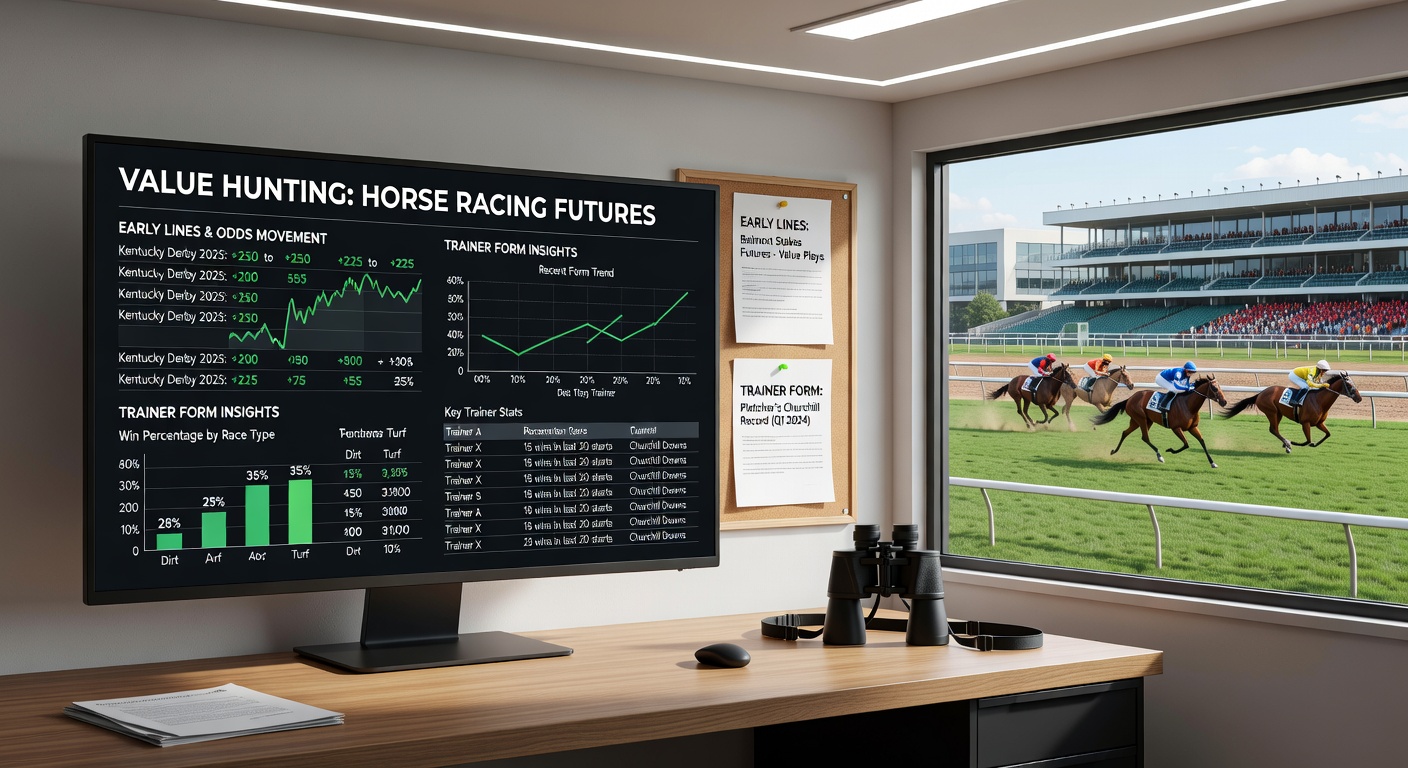
Now, as March 2026 approaches, futures for events like the Dubai World Cup or Australian Guineas intensify, with trainers posting barn updates that shift lines overnight; one observer caught a 33-1 overlay on a Godolphin runner after the handler's perfect record in Meydan trials surfaced, turning a modest stake into significant returns come race day.
Blending Early Lines with Trainer Insights for Maximum Edge
Combining these elements sharpens value detection: start by screening early lines for horses where the trainer's current form exceeds the implied probability; for a 10-1 quote, that's a 9% chance baked in, but if the barn's historical strike rate hits 15% in parallel spots, value exists. Tools like Timeform ratings or Beyer speed pars quantify this, revealing mismatches before the public piles in.
Case studies abound—recall the 2023 Preakness futures where a Chad Brown trainee opened at 14-1 despite the trainer's 28% win rate with shippers to Pimlico, crushing the field at 6-1; similarly, in Australian markets, Racing Australia stats showed a Ciaron Maher cast-off at 20-1 for the Cox Plate, leveraging the trainer's prep mastery to deliver at 8-1. These examples underscore how trainer angles bridge early line gaps, especially in deep fields.
Yet challenges persist: non-runners void bets in futures, so hedging with each-way terms or exchange trading mitigates risk; plus, international shipping adds variables, although trainers with global footprints like O'Brien maintain edges across borders.
Real-World Patterns and Data-Backed Examples
Delving deeper, one study of five years' Belmont Stakes futures found that horses from trainers with top-10 layoff win percentages returned +22% ROI for backers who pounced on 15-1+ lines; another pattern: early March releases for spring carnivals undervalue Euro raiders when trainers like Joseph O'Brien post flawless trials. Bettors cross-reference this with line movement trackers, spotting steamers from sharp money tied to trainer whispers.
So, in practice, a punter eyes 2026 Melbourne Cup futures opening soon, flags a 25-1 shot from a barn hot with stayers—recent wins at 2400m plus—and compares across books; if the line holds firm amid hype elsewhere, that's the overlay. It's noteworthy how such disciplined hunts yield edges, as aggregated data from global tote boards confirms futures value clusters around trainer surges overlooked in nascent markets.
Observers who've crunched numbers also highlight sectional upgrades: a horse clocking faster closing fractions under a form trainer signals futures potential, often before lines adjust, turning overlooked entries into profitable plays.
Practical Tools and Pitfalls to Watch
Beyond gut feel, platforms like DRF Formulator or Racing Post databases aggregate trainer stats with line histories, enabling custom queries; free resources track workout bullets, while premium feeds flag pattern matches in real-time. But pitfalls loom—overreacting to single trials ignores sample size, and juice on futures (vig up to 20%) erodes thin value, so demanding 15-20% overlays proves essential.
That said, disciplined bankroll management—staking 1-2% per bet—sustains long-term hunts, as variance in futures hits hard yet rewards persistence; those sticking to high-confidence trainer-line combos weather dry spells effectively.
Wrapping Up the Value Hunt
Value hunting in horse racing futures thrives on dissecting early lines through trainer form lenses, uncovering bets where probability exceeds price; from opening markets in early 2025 shaping 2026 spectacles to March trials tipping the scales, patterns persist for those who track diligently. Data consistently shows edges for methodical players, blending line analysis with barn insights to navigate fluid markets successfully, ensuring futures wagering delivers over time rather than chasing fleeting favorites.