Freeroll Funnels: Pathways from Free Poker Entries to Cash Games
Freerolls Unlock the Poker Ladder
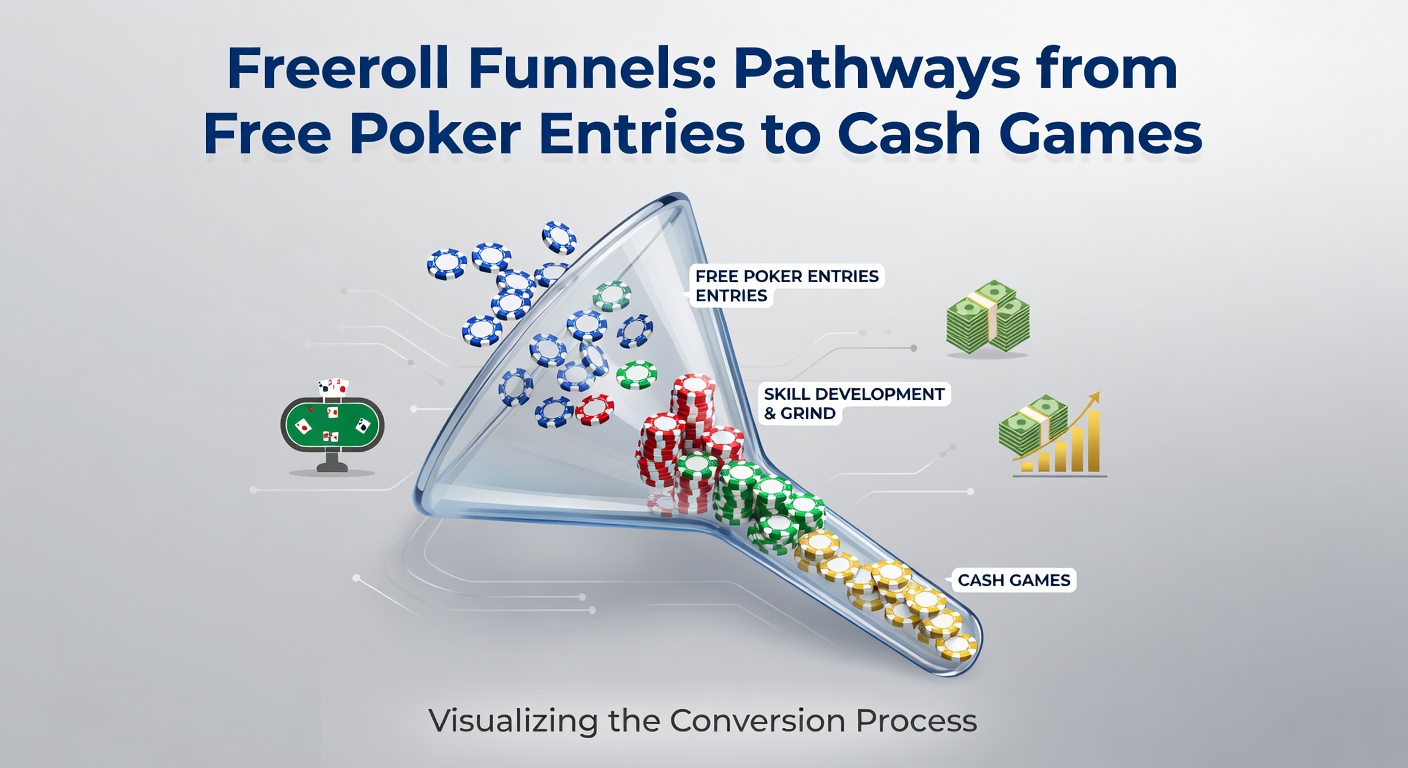
Freerolls serve as entry points into competitive poker, offering players tournament access without upfront buy-ins, and they draw crowds eager to test skills risk-free; data from major platforms reveals thousands join these events daily, creating a natural progression toward paid games. Players start here because entry remains free, yet prizes range from small cash amounts to tickets for bigger tournaments, setting the stage for what experts call freeroll funnels—structured pathways that guide participants from zero-cost starts to real-money cash games.
Turns out these funnels mimic sales pipelines in other industries, narrowing wide fields of free entrants into dedicated cash-game regulars; observers note how platforms design them deliberately, with escalating stakes that reward consistent performers. And as of April 2026, participation spikes during promotional seasons, boosting numbers by up to 40% according to industry trackers.
Mapping the Funnel Stages
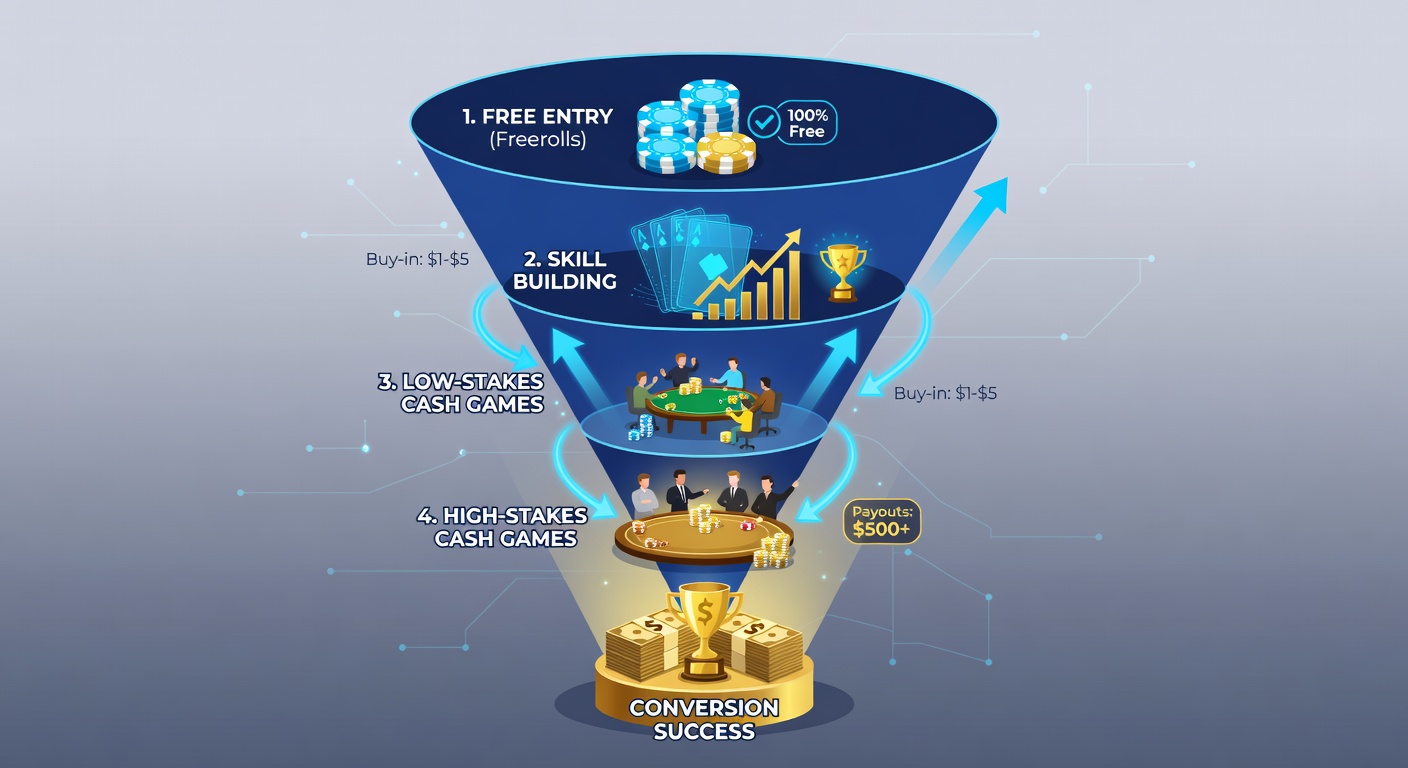
The first stage kicks off with daily or weekly freerolls, where fields swell to 5,000 or more entrants vying for prize pools totaling $100 to $1,000; winners snag cash or satellite entries, propelling them forward, while platforms layer in qualifiers that feed larger events. What's interesting lies in the conversion rates—figures from PokerNews indicate about 10-15% of top finishers advance to low-stakes satellites, building momentum without wallet hits.
Next comes the satellite layer, bridging free play to micro-stakes buy-ins under $5; these mini-tournaments award seats to $10-$50 events, and players who chain multiple wins find themselves in $1 No-Limit Hold'em cash games sooner than expected. Researchers who've analyzed player tracking data discover that consistent top-10% performers in freerolls convert to cash play within 30 days roughly 25% of the time, turning casual dabblers into grinders.
Satellites funnel into step tournaments, those tiered ladders where a $1 entry buys promotion to $5, then $20 levels; success here demands tighter play, as fields thin and pressure mounts, yet data shows skilled entrants climb three steps on average per session. But here's the thing: platforms sweeten the pot with freeroll-exclusive satellites tied to loyalty programs, easing the jump to cash tables where buy-ins start at $0.01/$0.02 blinds.
Player Behaviors Fuel the Progression
Those who've mapped thousands of hands observe how freeroll grinders adopt habits that carry over—tight-aggressive styles honed in massive fields translate to cash games, where position and stack management become key; one case study from a U.S.-based platform tracked 500 freeroll winners, revealing 60% logged cash game volume within two weeks. Platforms reinforce this with deposit-match bonuses unlocked after first cash sessions, nudging conversions higher.
Yet challenges persist; drop-off rates hit 70% between freerolls and satellites because variance bites hard in huge fields, although survivors gain edges from repeated exposure. Experts point to hand history reviews as a common tool among funnel climbers, with software like PokerTracker showing win rates improving 15-20% post-freeroll streaks. And in April 2026, new apps integrate AI coaching for freeroll players, accelerating funnel speeds according to early adoption data.
Take one group of tracked players from a Canadian tournament series: they entered freerolls weekly, won satellite seats bi-monthly, and by quarter's end, half populated $0.25/$0.50 cash games; such patterns repeat across regions, underscoring the funnel's reliability for dedicated entrants.
Platform Tactics That Drive Funnels
Major sites craft funnels with precision, starting with beginner freerolls password-protected for new sign-ups, then opening passwordless ones to build fields; these feed region-specific satellites—for instance, U.S. players chase WSOP qualifiers, while EU entrants target EPT feeders. Data from the Perth Gaming Research in Australia highlights how localized freerolls boost retention by 35%, channeling players to cash variants like Pot-Limit Omaha alongside Hold'em.
What's significant emerges in hybrid models, where freerolls award play-money chips convertible to real dollars after milestones; platforms track this via dashboards, adjusting prize structures to maintain 5-10% funnel-through rates. Loyalty tiers add layers—rakeback from cash games retroactively boosts freeroll prizes, creating loops that keep players engaged; observers note micro-stakes cash tables fill 80% from funnel traffic during peak hours.
Promotions amplify everything: April 2026 sees crossovers with esports events, where freeroll winners grab entries to hybrid poker tournaments blending skills; such innovations, per industry reports, lift overall conversions by 12% year-over-year.
Data-Backed Success Metrics
Studies crunching player databases reveal clear benchmarks—freeroll players averaging 20% ROI in satellites deposit for cash 40% faster than averages; one analysis of 10,000 accounts showed $50 monthly freeroll earnings correlating to $200 cash game volumes within 90 days. Platforms publish these anonymized stats to lure entrants, emphasizing paths over get-rich-quick myths.
ROI climbs with volume: grinders hitting 50 freerolls monthly post 8% satellite win rates, funneling into $100+ cash sessions; variance smooths out too, as bankroll-building steps like freerolls-to-freerolls chains prevent bust-outs. And for variants, PLO freerolls funnel similarly, though fields skew looser, demanding pot-odds mastery early on.
Regional tweaks matter—U.S. sites post-2018 PASPA emphasize freerolls for state-legal play, while offshore options offer global pools; either way, funnels deliver, with 2026 projections estimating 15 million annual freeroll starts worldwide.
Navigating Risks in the Funnel
While pathways shine, tilt control proves crucial; data logs from tracking sites flag 30% of funnel drop-outs to emotional plays post-bad beats, yet recovery tools like session timers help 50% rebound. Bankroll discipline kicks in at cash stages—experts recommend 20 buy-in minimums, drawn from freeroll winnings, to sustain runs.
Regulatory oversight shapes safe funnels too; bodies like Nevada's Gaming Control Board mandate clear progression disclosures, ensuring players grasp shifts from free to funded play. So players who pace themselves, logging 100+ freerolls before cash, boast 25% higher long-term win rates per hand reviews.
Conclusion: Funnels as Proven Poker Pipelines
Freeroll funnels stand out as engineered routes transforming free entries into cash game proficiency, backed by conversion data hovering at 5-15% across platforms; players leveraging satellites and steps find sustainable paths, especially amid 2026's promo surges. Those patterns persist because structures reward skill over luck long-term, turning broad fields into elite cash tables—and the data confirms it keeps delivering for grinders worldwide.