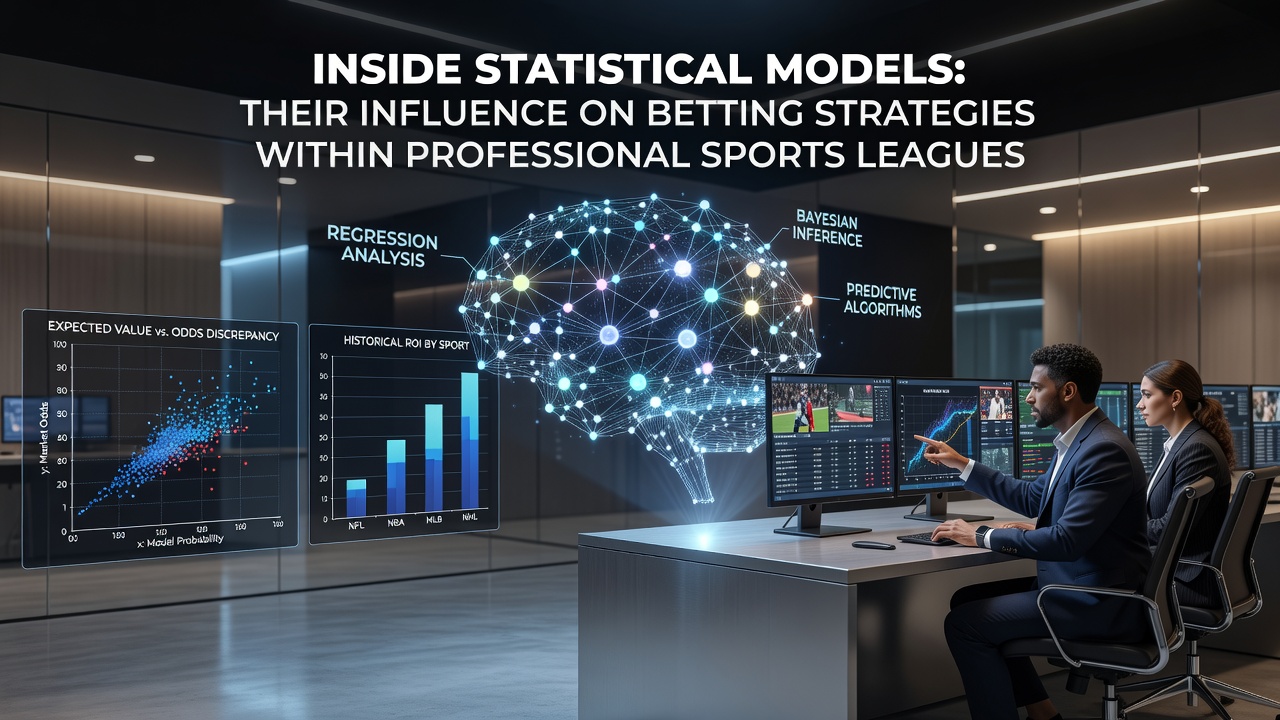
Inside Statistical Models: Their Influence on Betting Strategies Within Professional Sports Leagues
Statistical models have shaped how betting strategies develop across professional sports leagues since the early days of data collection in the mid-20th century and their role continues to expand as leagues release more granular information each season. Teams in the NFL and NBA began tracking player performance metrics in the 1970s while European football clubs followed similar paths and these datasets later fed into predictive frameworks that bettors adopted for their own analysis. Researchers at institutions like the University of Chicago developed early regression techniques that quantified scoring probabilities and those methods spread quickly among analysts working with sportsbooks.
Core Components of Statistical Models in Sports Betting
Poisson distributions form the backbone of many soccer betting models because they estimate the likelihood of goals scored by each team based on historical averages and defensive strength and similar approaches appear in hockey where goal totals remain low. In basketball analysts apply logistic regression to predict win probabilities while adjusting for pace and three-point shooting efficiency and these calculations update in real time during games. Machine learning algorithms now process player tracking data from systems like NBA's SportVU and NFL's Next Gen Stats and they identify patterns that traditional box scores miss such as defensive positioning or route running tendencies. Data from the 2025-2026 seasons shows that models incorporating injury reports and travel schedules improved accuracy rates by several percentage points compared to simpler versions.
Application Across Major Leagues
Major League Baseball relies heavily on sabermetrics where models evaluate pitcher-batter matchups using expected outcomes derived from thousands of plate appearances and these tools help shape in-game betting markets on strikeouts or total bases. The Australian Football League has seen parallel growth in statistical approaches since the introduction of detailed performance databases in the 2010s and betting operators there adjust lines based on expected score margins calculated from team efficiency ratings. Observers note that European basketball leagues including the EuroLeague publish advanced metrics that allow models to account for home-court effects and rest days while North American hockey uses Corsi and Fenwick ratings to gauge puck possession and shot quality. By August 2026 several leagues plan to release enhanced tracking data from wearable devices which will further refine model inputs for player fatigue and workload management.

Integration with Betting Markets and Odds Setting
Bookmakers maintain their own proprietary models that set opening lines and these systems draw from the same public data sources that sharp bettors use yet they incorporate additional layers such as betting volume trends and limit adjustments. When discrepancies arise between a bettor's model output and the posted odds arbitrage opportunities emerge though they close rapidly as markets react. A report from the National Collegiate Athletic Association research division indicates that model-driven betting volume has increased steadily in college sports where injury and lineup data flows quickly through official channels. Industry groups like the European Gaming and Betting Association track how model accuracy correlates with market efficiency and their findings show tighter spreads in leagues with transparent statistics.
Challenges and Limitations of Model-Based Strategies
Models struggle when unexpected variables appear such as rule changes or unusual weather conditions that historical data does not fully capture and this leads to recalibrations after each major event. Overfitting remains a persistent issue where algorithms perform well on past seasons but falter on new data because they capture noise rather than true signals. Regulatory bodies in various regions require operators to document how models influence odds and these disclosures help maintain transparency while bettors must still account for variance that no model can eliminate. Those who study these systems emphasize that combining multiple models often yields more stable projections than relying on a single framework and cross-validation techniques help identify robust predictors.
Future Developments in Statistical Modeling
Advances in artificial intelligence allow models to process unstructured data like social media sentiment or coaching press conferences and early tests in the 2026 offseason suggest these additions can refine pre-game adjustments. Leagues continue to expand data partnerships with technology firms and this collaboration supplies richer inputs for both betting markets and team decision-making. Analysts expect that real-time model updates during matches will become standard across more sports by the end of the decade and this shift will change how in-play betting markets operate.
Conclusion
Statistical models underpin much of the strategic thinking in professional sports betting today and their influence grows alongside improvements in data collection and computational power. Leagues, operators, and independent analysts all draw from overlapping datasets yet each group applies the information differently and this ecosystem continues to evolve with new technologies and regulatory frameworks. The patterns observed through August 2026 point toward even deeper integration of advanced analytics in the seasons ahead.