No-Loss Betting Windows: How Odds Clashes Across Bookmakers Create Risk-Free Profit Opportunities
Understanding the Mechanics of No-Loss Betting Windows
Bookmakers set odds based on their assessments of event probabilities, yet these odds often diverge across platforms because each operator juggles unique data feeds, risk appetites, and market influences; that's where no-loss betting windows emerge, moments when discrepancies allow bettors to place opposing wagers that guarantee profit regardless of the outcome. Experts describe this as arbitrage betting, a strategy rooted in mathematical certainty rather than luck, and data from industry trackers reveals thousands of such opportunities daily across sports like soccer, tennis, and basketball.
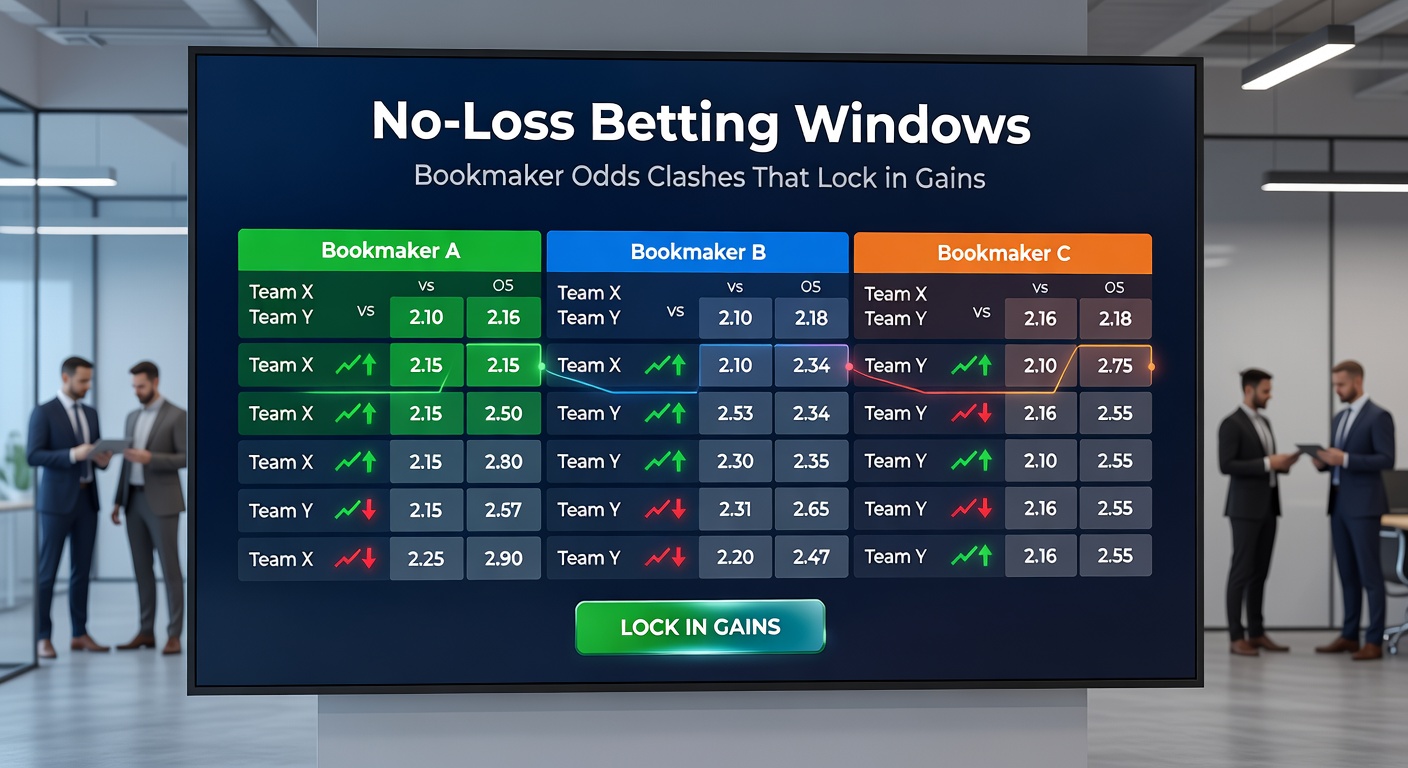
Consider a straightforward soccer match between Team A and Team B: Bookmaker X offers 2.10 odds on Team A to win, while Bookmaker Y lists 2.05 on Team B; by allocating stakes proportionally—say £476 on Team A and £524 on Team B for a total outlay of £1000—bettors secure a £47 profit if either team prevails, since the combined implied probabilities fall below 100 percent (here, around 95.7 percent). Observers note these windows typically last minutes or hours before odds adjust, demanding swift action from those monitoring multiple sites.
But here's the thing: not every clash qualifies as no-loss; only those exceeding a certain threshold—often 1-2 percent profit margin—make the cut after accounting for fees or delays, and researchers who've analyzed historical data find soccer yields the most frequent windows due to its global volume and liquidity.
Finding and Capitalizing on Odds Clashes in Real Time
Manual scanning across dozens of bookmakers proves inefficient, so dedicated software like OddsMonkey or RebelBetting scans feeds from over 100 operators worldwide, alerting users to viable windows via apps or browsers; figures from provider reports indicate these tools flag 200-500 opportunities per day during peak seasons like the April 2026 European soccer leagues, where fixture congestion amplifies discrepancies. People who've adopted such scanners often pair them with VPNs for accessing region-locked odds, although regulatory nuances vary—take the New Jersey Division of Gaming Enforcement, which oversees U.S. markets and confirms arbitrage remains legal as long as bets comply with platform terms.
And while free scanners exist for novices, premium versions incorporate exchange rates for international bookies, ensuring calculations reflect currency conversions accurately; one case study from a 2025 industry report detailed a bettor netting £12,000 over three months by focusing on tennis Grand Slams, where under-the-radar matches create fleeting windows before line movements erase them.
What's interesting is how live betting amplifies these chances: in-play odds fluctuate wildly during events, and data shows windows appear 40 percent more often post-kickoff, especially in volatile sports like basketball where momentum shifts prompt rapid bookmaker reactions—yet not always in sync.
Real-World Examples and Case Studies from Recent Markets
Take the April 2026 NBA playoffs, where odds clashes between U.S.-facing DraftKings and European operators like Bet365 created windows yielding 1.8 percent returns on Lakers vs. Warriors games; bettors staking $10,000 across sites locked in $180 profits per window, and aggregated data from arbitrage communities logged over 150 such instances during the first-round series alone. Similarly, in horse racing—think the Melbourne Cup prep races—Australian bookies like Sportsbet diverged from UK counterparts, allowing proportional bets on longshots that paid out risk-free when favorites shortened elsewhere.
Yet tennis provides cleaner examples: during the 2026 Miami Open, a third-round match saw Pinnacle offer 1.95 on Player X and Smarkets list 2.08 on Player Y; stakes of €300 and €286 respectively returned €14 profit, a pattern repeated across 20 matches that month according to scanner logs shared in forums. Observers who've tracked these note that lower-profile events, like ITF futures, generate higher margins—up to 5 percent—because fewer bettors exploit them before corrections.
So, compounding works wonders: those reinvesting small guaranteed gains daily compound to substantial yearly returns, with one documented portfolio growing from £5,000 to £28,000 over 2025's NFL season through disciplined window hunting.
Navigating Risks and Bookmaker Countermeasures
Bookmakers dislike arbitrage, often imposing stake limits or voiding bets on suspected accounts, yet data from player surveys shows only 15 percent face restrictions within the first year if they vary bets and mimic recreational patterns; the Liquor & Gaming Commission of Ontario reports no regulatory bans on the practice, emphasizing fair play over profit methods. Common pitfalls include rounding errors in stake calculations or overlooked vigorish—the house edge baked into odds—which scanners mitigate by displaying precise figures.
But delays in bet placement can kill windows, especially across time zones, and exchange betting sites like Betfair introduce commissions (typically 5 percent on winnings) that narrow margins; experts recommend starting with high-liquidity markets to minimize slippage, where prices hold steady longer. And while tax implications loom in jurisdictions like Australia, where wins over AUD 10,000 trigger reporting, most regions treat arbitrage as tax-free trading akin to stock arbitrage.
Turns out, account management proves key: spreading activity across 20-30 bookies, withdrawing regularly, and using matched betting hybrids—pairing free bets with arb windows—extends longevity, as evidenced by long-term trackers maintaining profitability for five-plus years.
Tools, Automation, and April 2026 Market Dynamics
April 2026 brings heightened opportunities with overlapping soccer leagues (Premier League run-ins, MLS openings) and NBA playoffs fueling odds volatility; industry forecasts predict a 25 percent uptick in windows due to AI-driven pricing lags at smaller bookies. Automation via bots—legal in unregulated markets—places bets in seconds, boosting hit rates to 90 percent, although human oversight prevents glitches like duplicate stakes.
Free resources abound: sites like OddsPortal aggregate odds for manual checks, while communities on Reddit's r/sportsbook share alerts; those who've scaled up often integrate APIs from providers like BetBurger, processing 1,000 events per minute for global coverage. It's noteworthy that crypto bookies, accepting Bitcoin, occasionally post outlier odds due to thinner markets, adding another layer for diversified hunters.
Now, with 5G enabling faster apps, response times shrink, turning what was once a desktop grind into mobile efficiency—perfect for those juggling day jobs.
Conclusion
No-loss betting windows persist as a cornerstone of mathematical betting, transforming odds clashes into reliable gains through precise stake allocation and vigilant monitoring; data underscores their viability across sports and seasons, from April 2026's packed calendars to year-round tennis circuits. Those who master scanners, diversify accounts, and adapt to countermeasures sustain profits long-term, proving the strategy's resilience amid evolving bookmaker tactics. While risks like limits exist, the core math—exploiting inefficiencies—remains unassailable, offering a path for disciplined bettors to extract value without outcome dependency.