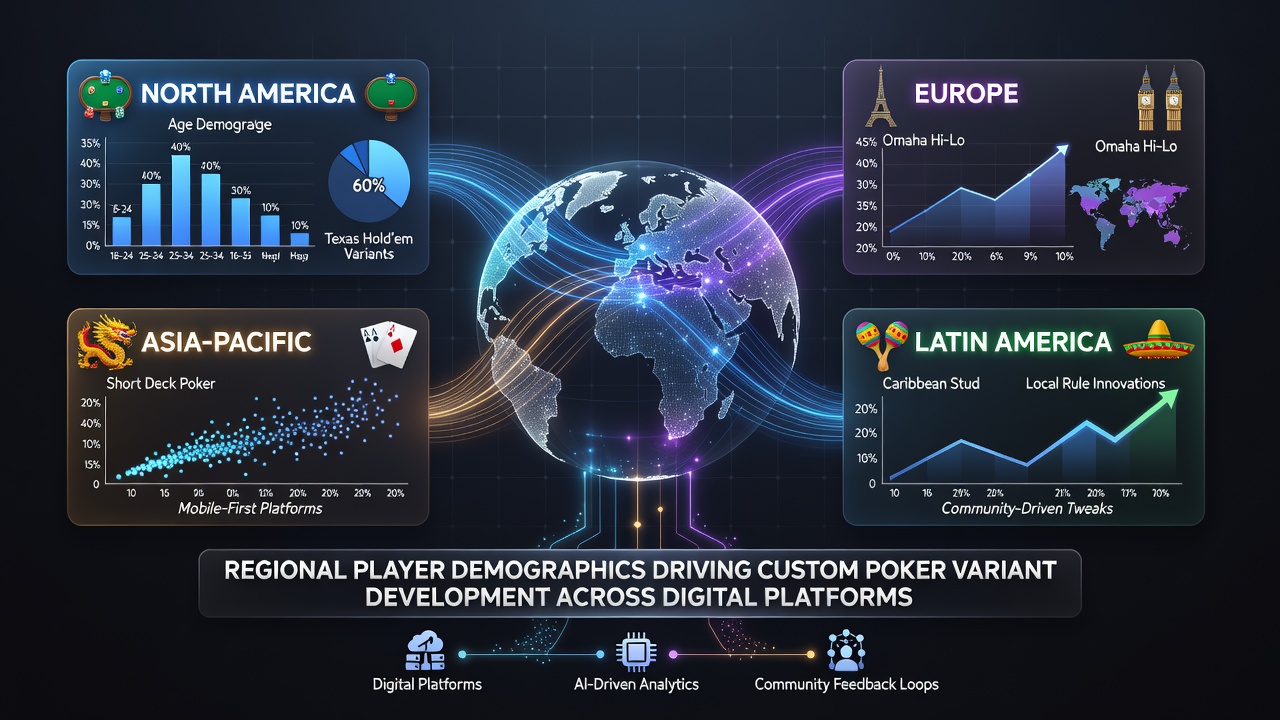
Data from multiple gaming markets shows regional player demographics directly influence how digital platforms develop and deploy custom poker variants. Age distributions, gender breakdowns, cultural preferences, and playing habits vary sharply across North America, Europe, Asia, and Australia, prompting operators to adjust game mechanics, pacing, and themes accordingly.Demographic Patterns Across Key Markets
North American players tend toward older age groups with higher disposable income, according to figures from the American Gaming Association, and they often favor variants that emphasize strategic depth over speed. European markets display broader age spreads while showing stronger interest in social and community-driven features. Asian regions, particularly in markets like South Korea and Japan, feature younger player bases that prioritize rapid rounds and mobile accessibility. Australian data highlights a balanced mix but with notable preferences for high-stakes formats among established users.
Gender composition also differs by location. Platforms serving Southeast Asian audiences report higher female participation rates in variants that incorporate lighter themes and shorter sessions, whereas North American and European sites maintain more traditional male-dominated player pools for standard formats.
Custom Variant Adaptations Driven by Regional Data
Operators respond to these patterns by creating localized poker variants that align with observed behaviors. In markets with younger demographics, developers introduce accelerated dealing sequences and simplified betting structures to match shorter attention spans and mobile-first habits. Platforms targeting older North American users add layers such as advanced hand-tracking tools and multi-table options that reward analytical play.
By July 2026, several major digital operators had released region-specific versions of games like Pineapple Poker and Short Deck Hold'em, each modified to suit local time zones, device preferences, and cultural motifs. These adjustments emerge from aggregated user data rather than uniform global rollouts.
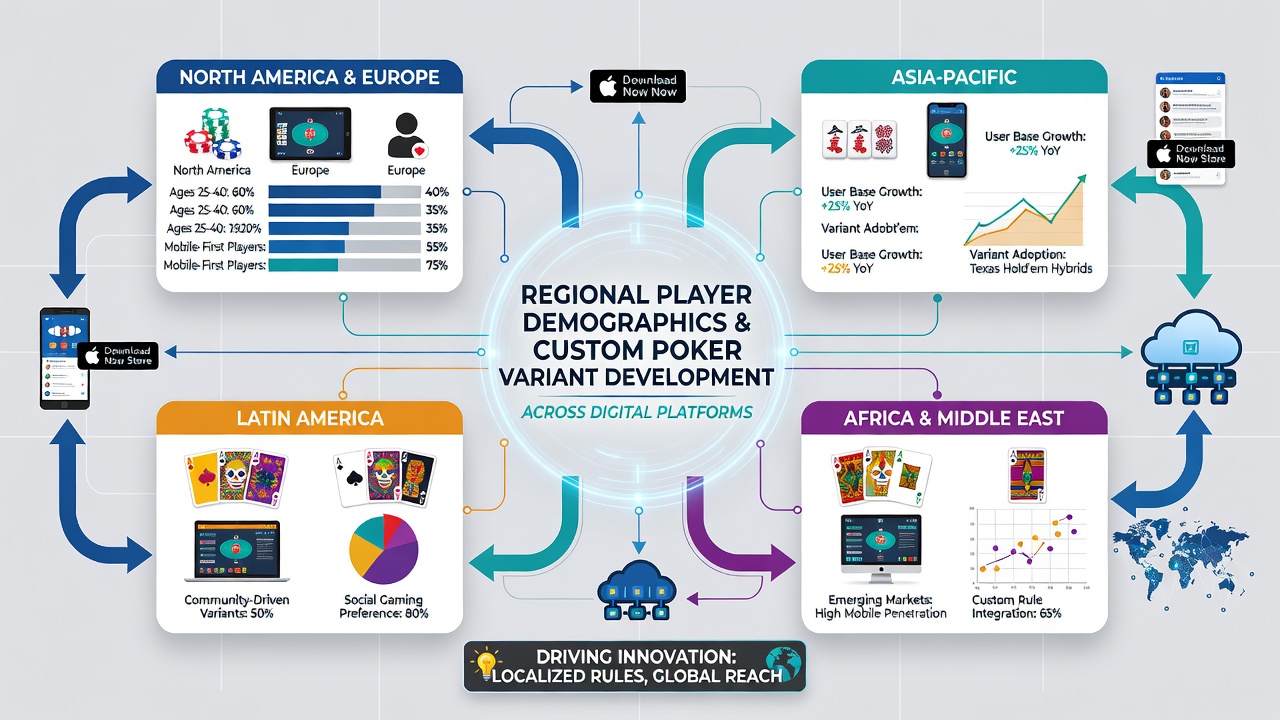
Research conducted at the University of Nevada, Las Vegas, indicates that platforms incorporating demographic segmentation see measurable increases in session length within targeted regions. One study tracked how variants tailored for Asian markets reduced average hand duration by nearly 30 percent compared to standard offerings, aligning with player retention goals.
Platform Implementation and Market Examples
Digital operators collect location-based telemetry to refine variant offerings continuously. A platform serving Canadian and Australian users might emphasize tournament structures with longer blind levels to accommodate evening play patterns common in those time zones. Meanwhile, services focused on European audiences integrate chat and leaderboard features that support group play among friends.
Regulatory environments further shape these developments. Data released through Singapore's Gambling Regulatory Authority shows how compliance requirements interact with demographic trends to encourage variants that include built-in responsible gaming prompts calibrated for specific age groups. Platforms adjust accordingly without altering core gameplay loops.
Observers note that smaller operators often follow patterns established by larger networks, adopting successful regional variants once performance metrics become public. This creates a feedback loop where demographic insights spread across the industry.
Future Trajectories Based on Current Trends
Continued growth in mobile usage across emerging markets suggests further customization around touch interfaces and shorter play windows. European operators, facing diverse regulatory landscapes, are expected to expand variants that blend poker with elements from local card games to increase familiarity.
North American platforms continue exploring integrations with live dealer technology, responding to demographics that value hybrid experiences combining digital convenience with real-time interaction. These shifts remain grounded in ongoing collection of player location, device, and behavior statistics.
Conclusion
Regional player demographics serve as the primary driver behind custom poker variant creation on digital platforms. Differences in age, location habits, and device preferences lead operators to develop targeted adaptations rather than one-size-fits-all solutions. Data from academic institutions and regulatory bodies in varied jurisdictions supports this pattern, showing measurable alignment between demographic profiles and game design choices. As platforms refine their data collection methods, variant development will likely continue along these regionally specific lines.