Regional Shifts in Online Wagering Player Demographics During Economic Downturns
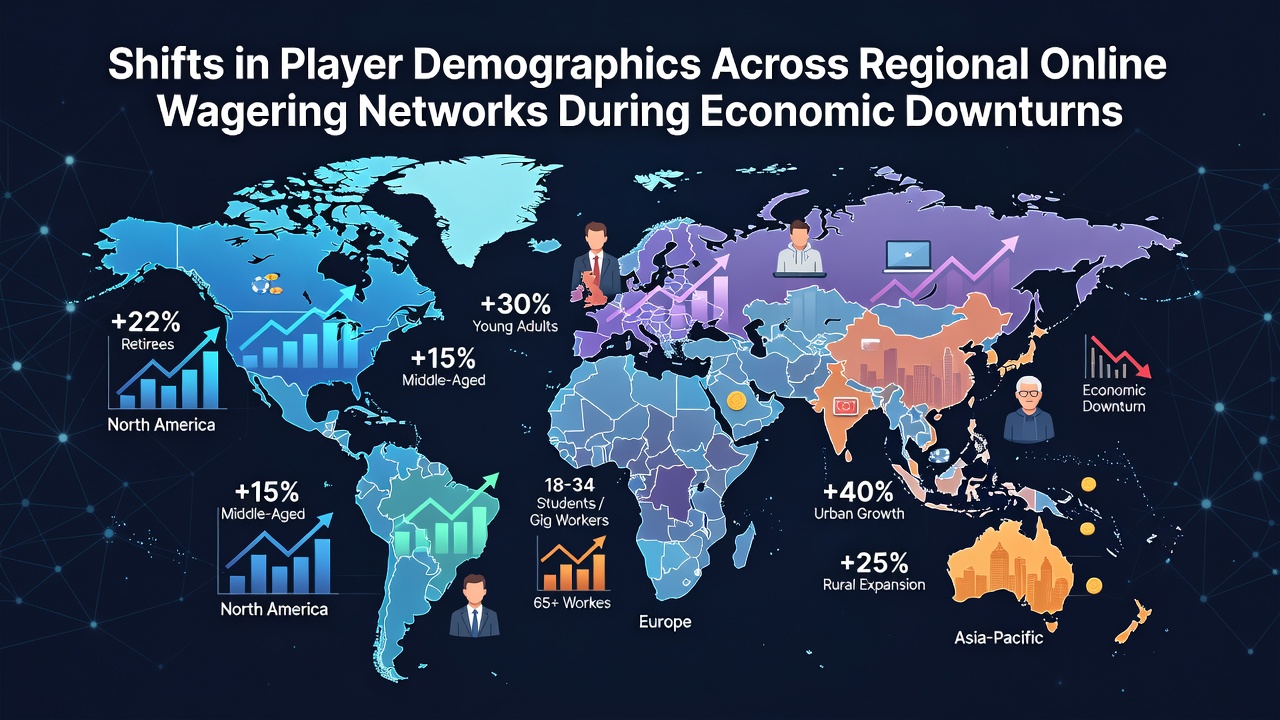
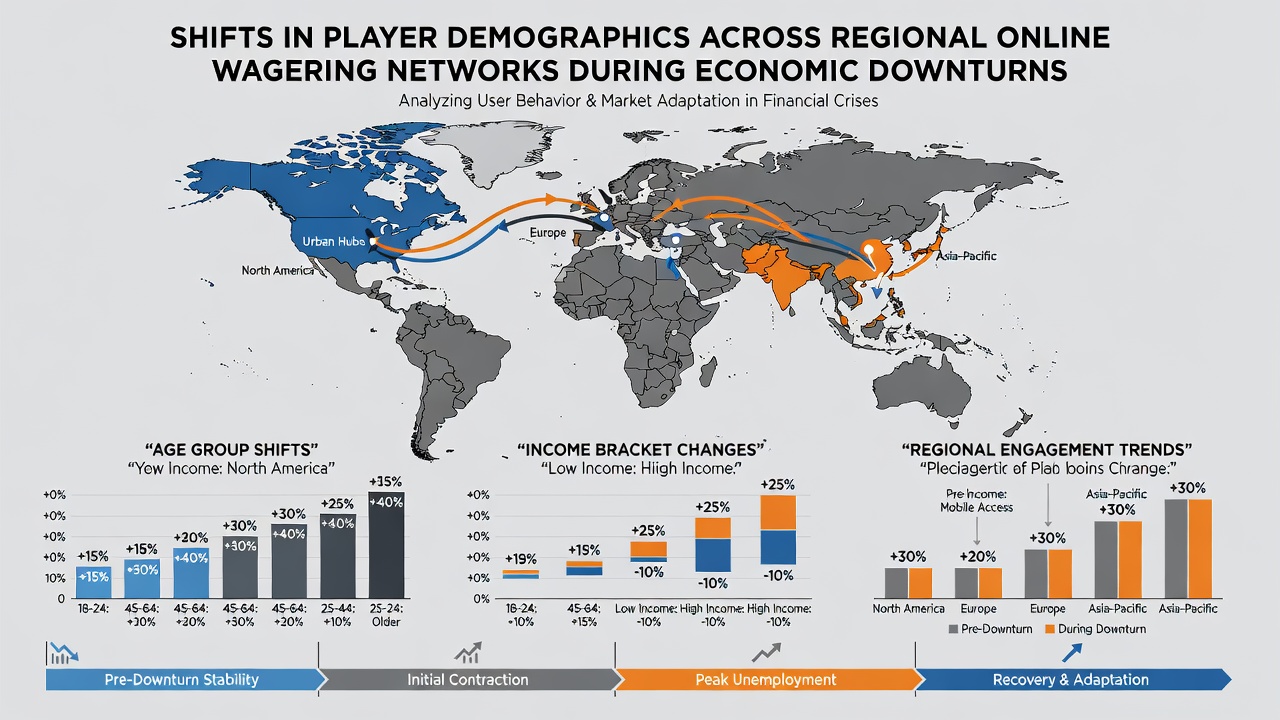
Observers note that economic downturns often trigger measurable adjustments in who participates in regional online wagering networks, with data from multiple jurisdictions revealing patterns tied to income fluctuations and employment stability. Research from academic institutions and regulatory bodies shows that participation rates among certain age cohorts rise while others decline, and these movements vary sharply by geographic area. In North America, for instance, figures from government statistical agencies indicate a noticeable uptick in users aged 25 to 34 accessing platforms during periods of rising unemployment, whereas older demographics in the same markets tend to reduce activity.
North American Trends and Employment Links
Studies conducted by research centers in the United States and Canada have tracked how job losses correlate with increased sign-ups on regional networks, particularly in states and provinces where traditional betting venues face closures or restrictions. Data compiled through 2025 and into August 2026 highlights that players in mid-income brackets shift toward lower-stake options or free-play modes when household budgets tighten, while high-income segments maintain steady volumes across platforms. Those who've examined transaction logs from major networks report that mobile access spikes in urban centers hit hardest by manufacturing slowdowns, suggesting convenience plays a larger role than leisure spending during these intervals.
European Variations by Country
Across European markets the picture differs by nation, with reports from EU-affiliated research groups documenting stronger retention among employed professionals in northern countries even as southern regions experience broader pullbacks. Evidence from longitudinal surveys points to an influx of first-time users in the 18-to-24 bracket in several member states, often linked to promotional entry points rather than sustained engagement. Observers tracking platform analytics note that session lengths shorten overall, yet the total number of active accounts in select Nordic networks holds steady because participants migrate from higher-risk products to structured pool games with predictable return profiles.
Asia-Pacific Data Patterns
Analyses from Australian and New Zealand regulatory archives reveal parallel movements, where economic indicators such as commodity price drops coincide with demographic rebalancing on local wagering sites. Figures released in mid-2026 show elevated participation from female users in the 30-to-45 range in metropolitan areas, a change researchers attribute to expanded access via smartphone applications and targeted loyalty programs. In contrast, rural cohorts in the same countries display slower adoption rates during the same windows, according to aggregated telemetry shared by industry associations.
One study released by a Canadian university research team examined account creation timestamps against regional unemployment filings and found statistically significant clusters in provinces experiencing automotive sector contractions. Similar methodologies applied in Latin American contexts, drawing on data from national lottery oversight bodies, indicate that younger urban populations increase trial activity during currency volatility episodes, although conversion to regular play remains lower than in stable periods. These observations align with broader findings from trade organizations that compile cross-border metrics on player retention.
Income and Product Preference Adjustments
Across multiple datasets, lower average deposit amounts appear consistently during downturn intervals, with researchers documenting a move toward skill-influenced formats such as certain poker variants over pure chance games in several Asian networks. Reports from academic papers hosted on open repositories note that this preference shift occurs more rapidly in markets with established regulatory frameworks, where transparent payout information encourages cautious exploration. Meanwhile, established players in European networks often consolidate activity onto fewer platforms, reducing multi-site usage as household finances come under pressure.
What's notable is how these patterns diverge by regulatory environment. Markets with strict licensing regimes show slower overall growth yet more stable demographic composition, while less regulated regions experience sharper swings in age and income distribution. Data aggregated through 2026 continues to underscore that external economic signals, rather than platform features alone, drive the majority of these measurable changes.
Conclusion
Regional online wagering networks reflect economic conditions through evolving player demographics, with documented shifts in age, income, and geographic concentration tied directly to employment and currency trends. Continued monitoring by government agencies and independent research bodies provides the clearest picture of how these adjustments unfold across different parts of the world.