Statistical Modeling's Role in Niche Sports Prediction Markets
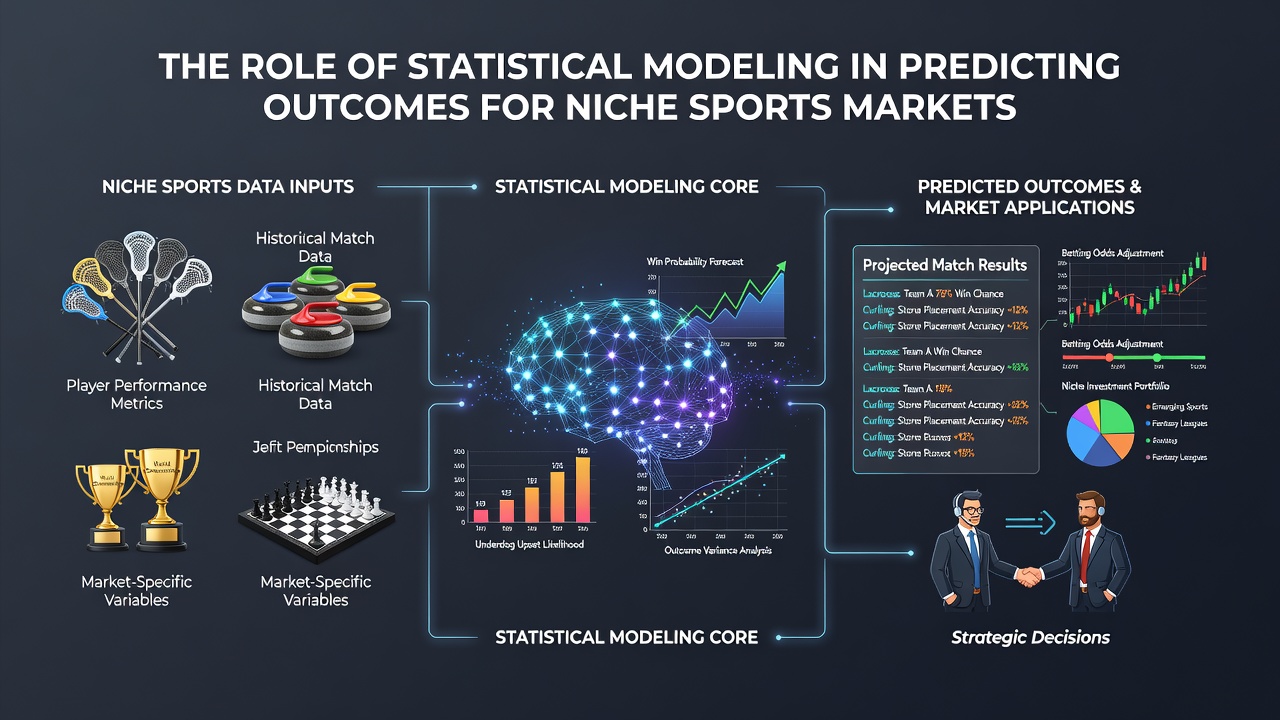
Statistical modeling applies mathematical frameworks to historical performance data, player statistics, and environmental variables in order to generate probability estimates for events in niche sports markets, and these methods have expanded significantly as data collection technologies improved across various athletic disciplines. Observers note that niche sports such as darts, table tennis, and curling generate smaller betting volumes than mainstream events yet still attract specialized analysts who rely on regression analysis, Bayesian inference, and machine learning algorithms to identify patterns that traditional scouting overlooks.
Core Techniques in Model Development
Researchers build models by compiling datasets that include match results, head-to-head records, venue conditions, and athlete fatigue indicators, while Poisson distribution methods help estimate scoring rates in low-scoring competitions like snooker or badminton. Multiple regression equations incorporate variables such as home advantage coefficients and travel distance impacts, and these calculations allow forecasters to adjust probabilities when unexpected factors arise during tournaments scheduled for June 2026.
Bayesian updating refines initial predictions as new information arrives during live events, and this iterative process proves especially useful in niche markets where public data remains limited compared to major leagues. Analysts apply Markov chain models to simulate sequences of points in racket sports, thereby producing outcome distributions that reflect the likelihood of extended rallies or sudden momentum shifts.
Data Sources and Integration Challenges
Public records from national sports federations supply foundational statistics, yet supplementary inputs from wearable sensors and video tracking systems enhance model accuracy in disciplines such as archery and fencing. Integration requires careful handling of missing values and inconsistent reporting standards across different countries, which complicates efforts to create unified datasets for global niche competitions.
Studies from academic institutions demonstrate that ensemble methods combining several algorithms often outperform single-model approaches when applied to smaller sample sizes typical of niche events. Data indicates that models trained on five or more seasons of results achieve greater stability, although sudden rule changes or equipment modifications can still introduce volatility that requires manual recalibration.

Applications Across Specific Disciplines
In curling, logistic regression models evaluate stone placement efficiency and sweep effectiveness to predict end-by-end scoring margins, and these forecasts support market makers who set odds for international championships. Table tennis analysts utilize time-series decomposition to separate seasonal form trends from random fluctuations, which helps isolate the impact of player injuries or coaching adjustments during extended tournament schedules.
Handball predictions frequently incorporate Poisson-based goal expectancy calculations adjusted for defensive formations, while darts models factor in checkout percentages and average throw distributions to estimate match-win probabilities. Observers note that these specialized applications allow operators to maintain balanced books even when overall transaction volumes stay modest relative to football or basketball markets.
Regulatory Context and Model Validation
Agencies such as the National Council on Problem Gambling emphasize responsible use of predictive tools, and validation protocols require back-testing against historical results to confirm that models maintain calibration over time. Industry reports from the European Gaming and Betting Association highlight ongoing efforts to standardize transparency requirements for statistical disclosures in emerging markets.
Performance metrics such as Brier scores and log-loss functions provide quantitative measures of forecast reliability, and regular audits help detect when models begin to degrade due to evolving competitive landscapes. June 2026 brings renewed focus on these validation processes as several niche federations release expanded datasets from continental qualifiers, giving modelers fresh material for refinement.
Future Developments in Modeling Approaches
Advances in natural language processing now allow incorporation of qualitative factors extracted from post-match interviews and coaching commentary, which adds depth to purely numerical frameworks. Reinforcement learning agents simulate strategic decisions within niche sports rulesets, generating synthetic match data that supplements sparse real-world records and improves robustness for rare event scenarios.
Cloud-based computing resources enable real-time recalibration during live competitions, and this capability proves valuable when niche events feature unpredictable weather or equipment variables that shift rapidly. Those who monitor these systems report that hybrid human-machine workflows deliver the most consistent results because domain experts can flag contextual nuances that automated pipelines might miss.
Conclusion
Statistical modeling continues to expand its footprint in niche sports markets by transforming raw performance records into actionable probability estimates, and ongoing improvements in data quality alongside algorithmic sophistication support more reliable forecasts. Integration of diverse information sources combined with rigorous validation standards helps maintain integrity across these specialized prediction environments, while future innovations promise further refinement as competitions evolve.