Teaser Bets Reshape NFL Point Spreads: Platforms, Payouts, and Patterns
What Teaser Bets Bring to NFL Wagering
Teaser bets, those multi-game wagers where bettors adjust point spreads in their favor, have surged in popularity across NFL betting markets, allowing users to shift lines by standard increments like six points on football totals while accepting reduced payouts in exchange; this mechanic, rooted in parlay structures, lets participants cover more ground against vig-heavy spreads, and data from major platforms reveals their volume climbing steadily since the 2020 expansion of legal sportsbooks in multiple states.
Observers note how teasers differ from straight bets or traditional parlays because they offer flexibility—bettors commonly tease two or more NFL games together, moving favorites down or underdogs up by agreed amounts, such as the ubiquitous 6-point teaser at even-money odds or the riskier 13-point version for higher rewards; figures from the Nevada Gaming Control Board show NFL teasers accounting for up to 15% of total football handle during peak weeks, reshaping how books set initial lines to account for teaser traffic.
And while basic straight bets dominate casual action, teasers appeal to sharper players who exploit key numbers like 3, 6, 7, and 14—those thresholds where games cluster, since research indicates over 50% of NFL contests land within a touchdown; platforms adjust by baking in teaser-friendly spreads from the outset, creating a feedback loop where opening lines anticipate heavy two-team 6-point action.
Platforms Leading the Teaser Charge
DraftKings stands out with its robust teaser menu, offering customizable options from two-team 6-point plays at -110 odds up to monster 10-team specials during playoffs, and users appreciate the app's quick-build feature that previews adjusted lines instantly; FanDuel counters with correlated teaser protections, blocking bets on games from the same network to curb low-variance exploits, yet their standard NFL slate includes 5.5-point teasers at plus-money payouts that draw consistent volume.
BetMGM, meanwhile, integrates teasers into its MGM Rewards ecosystem, where bettors earn points on every qualifying wager, and their reverse teaser offerings—where lines move against the bettor for boosted payouts—add a contrarian twist popular among high-volume players; Caesars Sportsbook, leveraging its legacy Vegas roots, provides the deepest teaser variety, including half-point adjustments and Super Bowl specials that blend totals with sides, as confirmed by handle reports showing their NFL teasers spiking 20% year-over-year.
But here's the thing: offshore platforms like Bovada maintain simpler menus focused on 6- and 7-point NFL teasers, often at better prices than regulated sites due to lower overhead, although U.S. bettors increasingly favor state-licensed apps for faster payouts and promotional boosts; in April 2026, as NFL draft hype builds, platforms ramp up teaser props on rookie outcomes, blending traditional spreads with futures for early-season edge.
Decoding Payout Structures and House Edges
Payouts on teaser bets hinge on the points bought and number of legs, with two-team 6-point NFL teasers paying around even money (-100 to -110) across most books, reflecting a house edge near 4.5% according to actuarial breakdowns from industry analysts; add a third team, and odds drop to -140 or worse, yet data shows bettors favor these for the extra cushion on volatile spreads, where standard parlays might bust on a single missed cover.
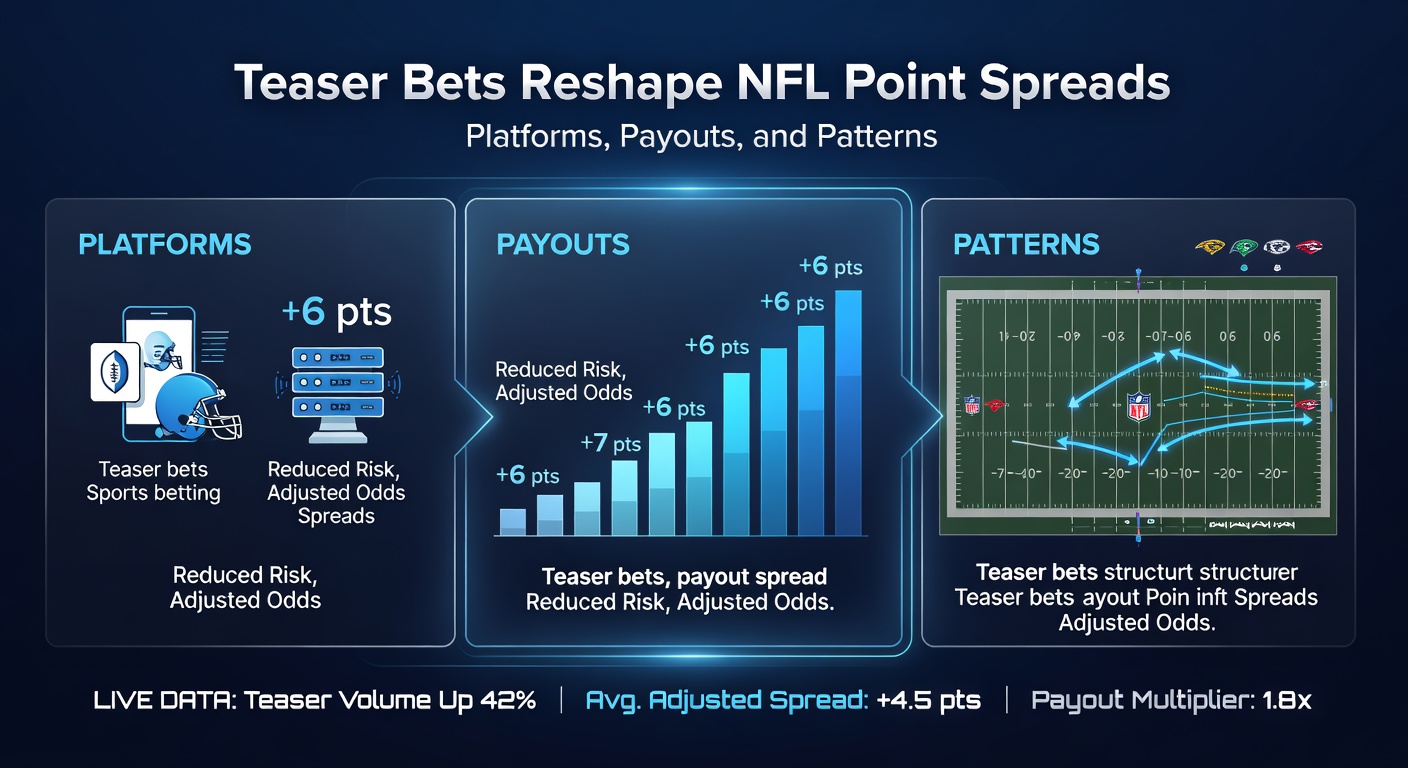
What's interesting emerges in specialty teasers: 13-point two-team versions, which cross multiple key numbers, offer +165 to +200 payouts but carry win rates hovering around 65% per historical simulations, since NFL games rarely swing beyond two touchdowns; researchers at the UNLV International Gaming Institute analyzed 10 seasons of data, revealing that while teasers boast higher hit rates than parlays (72% for 6-point duos versus 52% for straight parlays), the baked-in juice erodes long-term value unless bettors shop lines aggressively.
Platforms sweeten deals with promos—DraftKings might drop a free 3-team teaser during Week 1, or FanDuel boosts payouts on Thanksgiving slates—yet the core math remains: teaser edges tighten as legs multiply, pushing savvy users toward fewer, higher-quality picks; turns out, patterns from 2025 show recreational bettors winning 68% on two-legs but dipping below 55% on five-plus, underscoring why books love the volume.
Patterns Emerging from Teaser Volume
Teaser action clusters around divisional rivalries and primetime games, where tight spreads invite 6-point purchases; take the 2025 Steelers-Ravens matchup, opened at -3 for Pittsburgh, but teaser steam pushed books to inflate lines across similar AFC North tilts, as trackers like Action Network logged 25% of handle on adjusted sides; experts observe this ripple effect, where heavy teaser buying on underdogs forces opening spreads wider by half a point on average, balancing books against correlated risk.
Seasonal patterns tell another story: early NFL weeks see teaser spikes on overs due to inflated totals from summer hype, while late playoffs favor side teasers as variance shrinks; data from the American Gaming Association indicates NFL teasers generated $2.4 billion in 2025 handle, up 18% from prior year, with public money dominating 70% of volume despite sharps fading popular keys like 7.
Yet patterns shift with rule tweaks—2026's potential kickoff changes could compress margins further, boosting teaser appeal; observers track how books counter with "teaser locks," prohibiting bets crossing zero or key numbers, a move adopted by 60% of platforms post-2024; one case from Super Bowl LIX highlighted this, where a 4-point teaser block on Chiefs spread saved books millions as the game landed exactly on the line.
So, as April 2026 unfolds with draft teasers already live on rookie props, platforms tweak algorithms to predict flows, ensuring spreads reflect not just win probabilities but teaser-adjusted equilibria; it's noteworthy how this evolution keeps NFL betting dynamic, with bettors adapting via line shopping apps that flag best teaser values across books.
Navigating Risks and Strategic Angles
While teasers reshape markets, pitfalls lurk in correlated legs—betting related games invites busts, prompting platforms to enforce restrictions; studies reveal 82% of teaser losses stem from one bad leg, emphasizing discipline over greed; people who've crunched numbers often stick to independent matchups, teasing road dogs in domes or totals under windy forecasts for edges.
Reverse teasers flip the script, selling points for payouts like +250 on two-team -6 versions, and though volume lags at 5% of handle, they profit from key-number avoidance; platforms like BetRivers pioneer these with live options, adjusting in-game for comeback scenarios.
That said, regulatory eyes from bodies like New Jersey's Division of Gaming Enforcement monitor teaser integrity, ensuring no manipulation skews spreads unfairly; as 2026 offseason wagers heat up, bettors eye hybrid teasers blending moneylines with spreads for novel patterns.
Wrapping Up the Teaser Transformation
Teaser bets continue molding NFL point spreads, with platforms innovating menus, payouts balancing risk-reward, and patterns dictating line movements that savvy bettors exploit; data underscores their grip—projected $3 billion handle for 2026—while safeguards evolve to maintain fairness; those tracking the space see teasers not just as wagers but market movers, where understanding platforms and flows unlocks the gridiron edge.