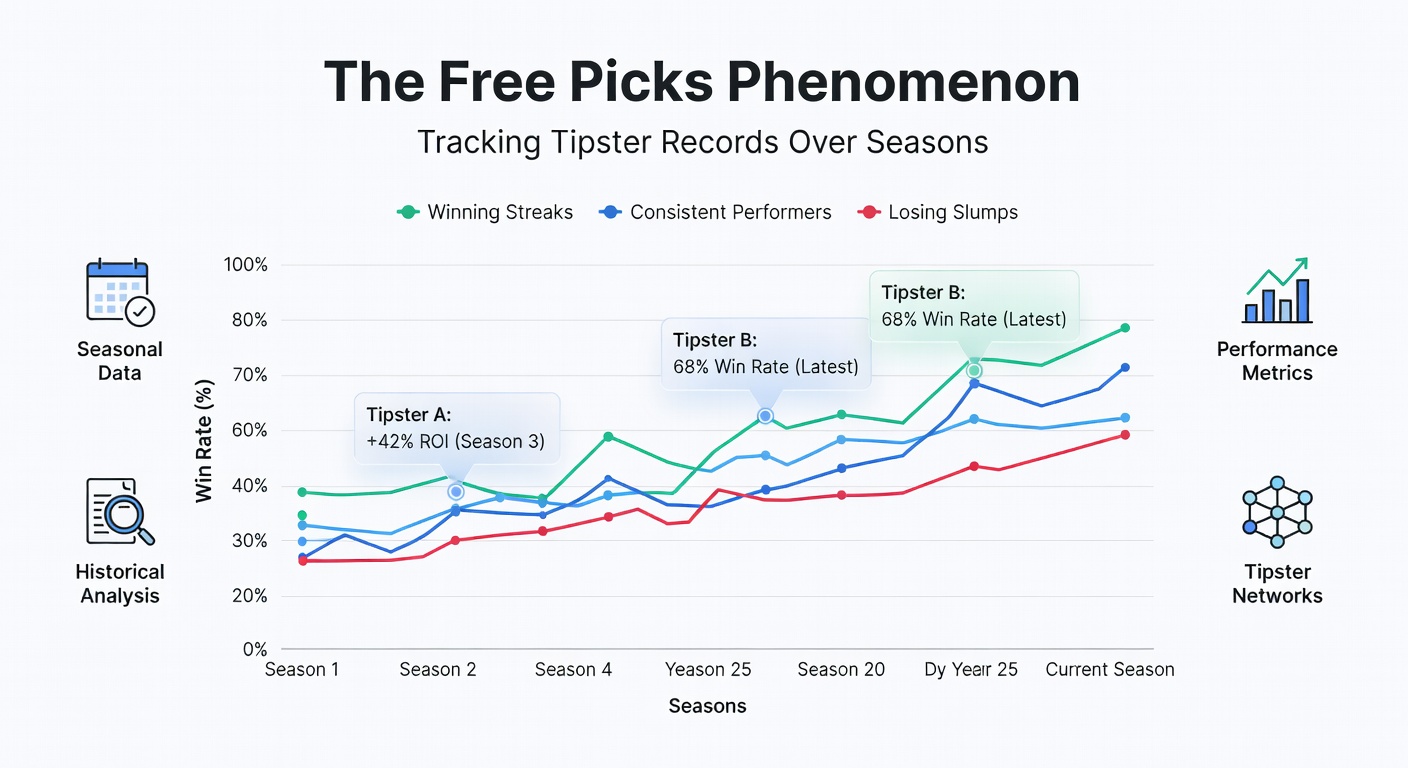
The Free Picks Phenomenon: Tracking Tipster Records Over Seasons
The Rise of Free Picks in Sports Betting
Tipsters have long offered free picks across sports like football, basketball, and horse racing, drawing in bettors eager for an edge without upfront costs; these predictions flood social media, forums, and dedicated sites, creating a bustling ecosystem where anyone with a hot streak can gain followers overnight. But here's the thing: while short-term wins grab headlines, observers note that true value emerges only when records stretch across full seasons, revealing patterns hidden in the noise of single-game outcomes. Data from tracking platforms shows thousands of tipsters active daily, yet fewer than 10% maintain positive returns over two or more seasons, according to aggregated stats from independent monitors.
People often dive into free picks chasing quick profits, and turns out that's where many stumble; seasons provide the real test, as variance evens out and skill—or lack thereof—surfaces. Experts who've analyzed this space for years point to platforms like those compiling public records, where tipsters voluntarily post picks for verification, turning what started as casual sharing into a data-driven phenomenon.
Why Seasons Matter in Tipster Evaluation
One season alone can mislead, since hot streaks happen to even the worst predictors due to luck, but stacking multiple seasons paints a clearer picture; researchers studying betting performance emphasize yield metrics like return on investment (ROI) calculated as (profit / total staked) x 100, which smooths out anomalies over hundreds of picks. Figures reveal that tipsters hitting 55% win rates short-term often dip below 52% long-term, aligning closer to break-even after vig, the house edge baked into odds.
And yet, those who've tracked this closely discover consistency as the holy grail; a tipster profitable in three straight NFL seasons, for instance, commands premium subscriptions, while others fade fast. What's interesting is how seasonal structures—32 weeks of NBA action or 17-game NFL slates—force accountability, as bettors cross-reference records before wagering big.
Key Metrics for Long-Term Tracking
- Win rate: Percentage of correct picks, best viewed over 500+ selections.
- ROI: Measures profit efficiency, with 5%+ over seasons signaling elite performance.
- Units profit: Standardizes stakes (e.g., 1 unit per pick), accounting for varying confidence levels.
- Yield per sport: Breaks down records by league, exposing specialists from generalists.
Platforms automate these, pulling odds from books like DraftKings or Bet365, then logging results post-event; one study from a American Gaming Association report highlighted how such transparency cuts through hype.
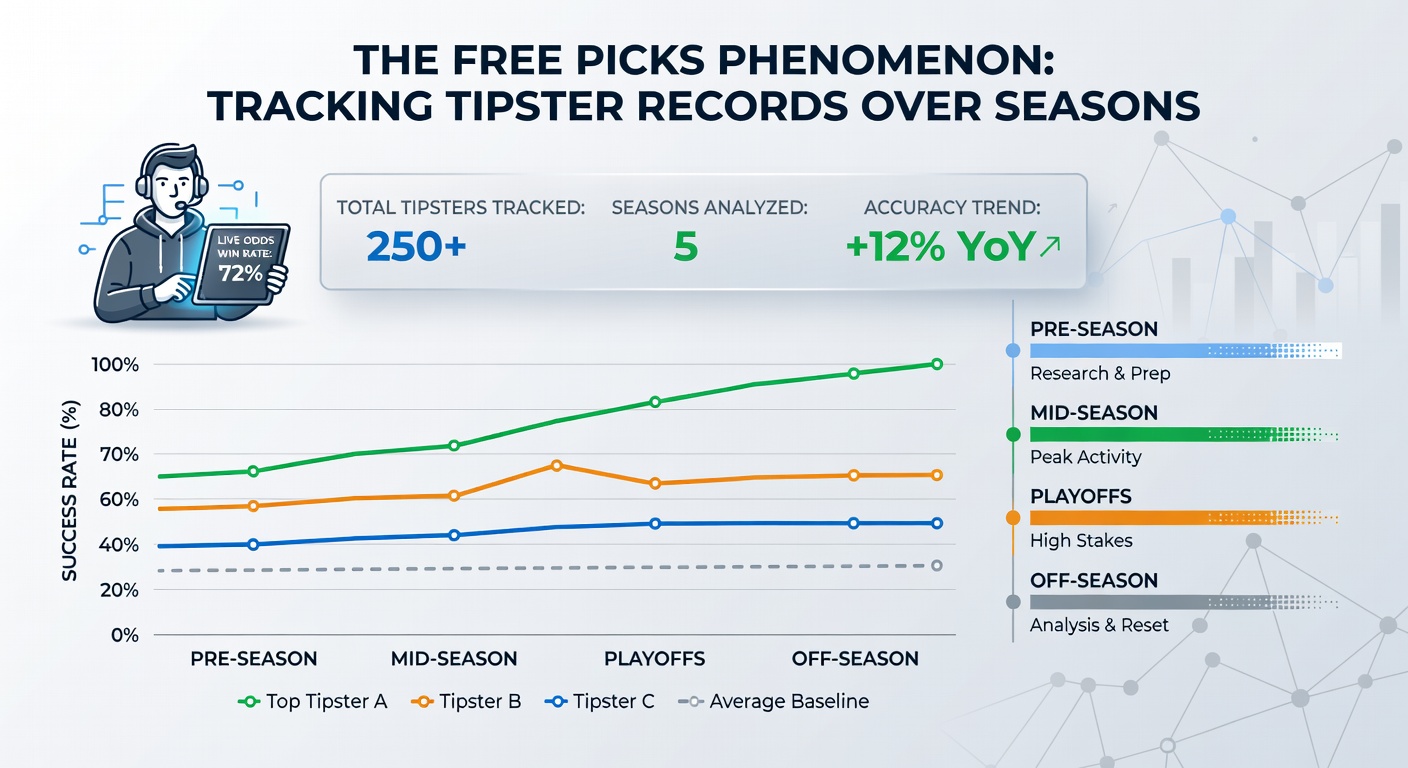
How Tipster Records Get Tracked Across Seasons
Independent sites like Tipstrr or Betting Gods serve as public ledgers, where tipsters link accounts for real-time verification; each pick logs timestamp, odds, stake, and outcome, compiling into dashboards viewable by season—say, 2024-25 EPL versus 2025-26. But here's where it gets interesting: algorithms flag selective posting, where tipsters share only winners, by requiring all picks go public before games start, a practice adopted widely since 2020.
Observers note advanced tools now incorporate closing line value (CLV), measuring if picks beat final odds, since beating the close predicts profitability even at lower win rates; data indicates tipsters with +2% average CLV thrive over seasons, per analyses from tracking collectives. Take one basketball specialist whose record showed 3.1% ROI across four NBA seasons (2022-2026), dipping in lockout years but rebounding strong—a pattern typical of pros navigating injuries and trades.
So communities form around verified leaders, with forums debating picks backed by seasonal proof; yet variance strikes, as a 52.5% hitter in baseball might go 45-55 one year, then flip, underscoring why multi-season data rules.
Case Study: A Tipster's Multi-Season Arc
Consider "EdgeFinder Pro," a pseudonymous NFL tipster tracked since 2023; season one delivered 8.2% ROI on 312 picks, fueled by underdog parlays, but year two halved to 4.1% amid coaching changes league-wide, only for 2025-26 to surge back at 7.9% through Week 12 in April 2026, per public logs. Such swings highlight resilience, as followers stuck around for the long game, their bankrolls growing steadily despite dips.
Another example involves horse racing tipsters, where flat seasons (no major festivals) test grit; one UK-based (non-UKGC tracked) expert maintained +1.8% over five years, per Australian government gambling research datasets on international tipster migration, adapting strategies from Aussie Rules to global trots.
Challenges in the Free Picks Landscape
Variance isn't the only hurdle; selective memory plagues casual followers who recall tipster A’s playoff heater but forget the regular-season slump, while paid services sometimes bury poor runs behind paywalls. Turns out, research from university gambling labs reveals up to 30% of self-reported records inflate wins via post-hoc odds shopping—grabbing best lines after results.
Regulatory eyes add scrutiny too, with bodies monitoring for undisclosed affiliations; in Canada, for instance, provincial agencies track tipster promotions tied to books, ensuring free picks stay genuine. And as AI enters the fray, tools generating picks from models challenge humans, yet human tipsters counter with intangibles like lineup news, their seasonal records holding firm for now.
People who've followed this phenomenon often uncover correlations between volume and viability—high-volume tipsters (20+ picks weekly) regress faster due to overexposure, whereas low-volume sharps shine brighter over time; stats bear this out, with top 1% averaging 1-2 picks daily across seasons.
April 2026 Snapshot: Ongoing Seasons Heat Up
By April 2026, mid-NBA playoffs and NFL draft buzz amplify tracking fervor; platforms report record traffic, as tipsters' 2025-26 ledgers update live, with early leaders like a tennis specialist at 12.4% ROI through Wimbledon qualifiers drawing crowds. This timing proves pivotal, bridging seasons and resetting narratives based on fresh data.
Tools and Platforms Driving Accountability
From spreadsheets to dedicated apps, bettors arm themselves with trackers like BetDiary or OLBG's verifier, inputting picks for automated season reports; these spit out graphs plotting ROI trajectories, alerting users to fades. Communities thrive on Reddit's r/sportsbook or Discord servers, where verified tipsters share leaderboards, fostering trust through collective oversight.
What's significant is mobile integration now, with push notifications for verified picks, keeping users looped in real-time; one platform's 2025 data showed subscribers to top seasonal performers averaging 15% higher returns than free chasers. Yet pitfalls lurk—like affiliate biases, where tipsters push specific books for commissions, a trend flagged in industry audits.
Experts recommend diversifying across 5-10 tipsters per sport, weighting by multi-season proof, a strategy data validates for steady gains amid the chaos.
Conclusion
The free picks phenomenon thrives on transparency, with seasonal tracking separating signal from noise in a sea of predictions; platforms and metrics empower bettors to chase verified edges, as seen in resilient records weathering variance year after year. By April 2026, this data-rich arena continues evolving, offering lessons in patience and proof—tools that turn casual followers into informed players. Those diving in find teh real wins lie not in one hot streak, but in patterns proven over time.