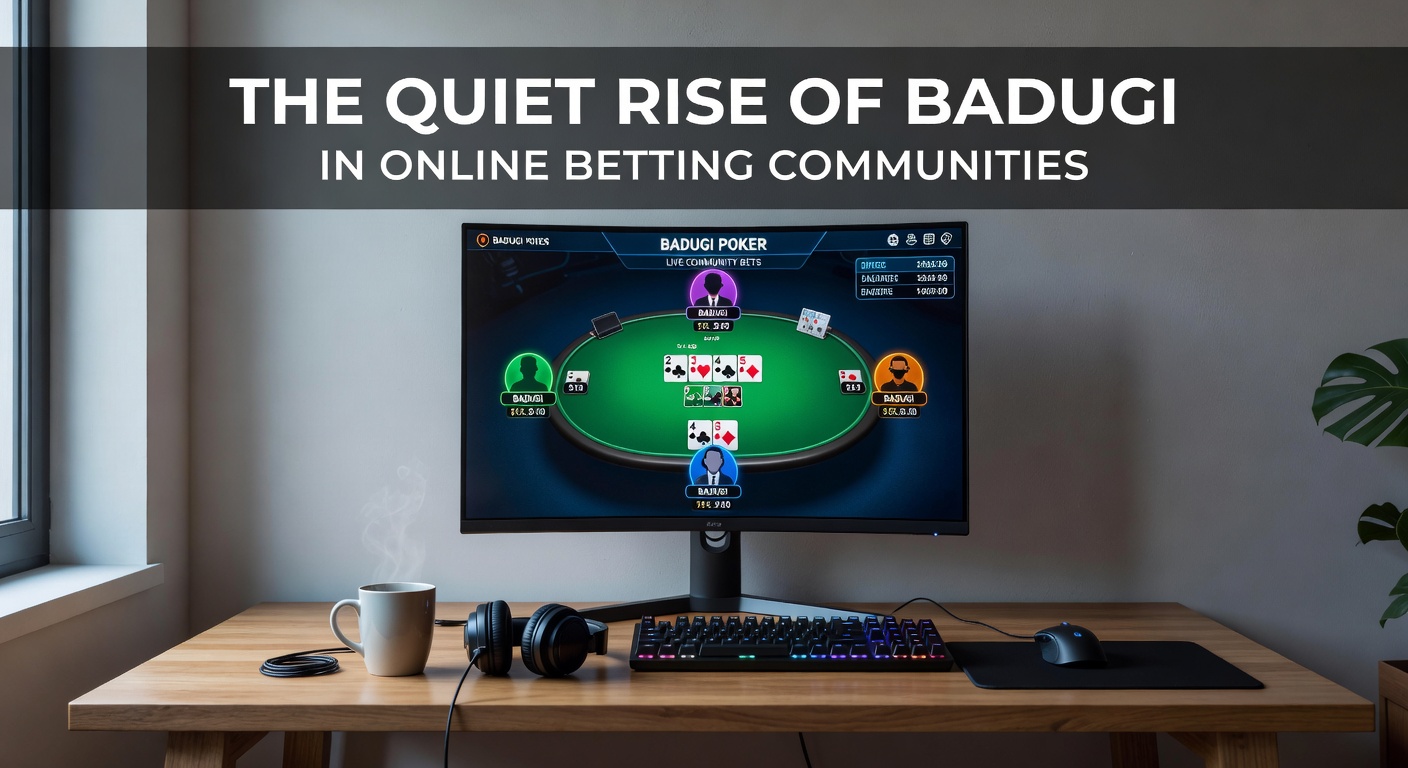
The Quiet Rise of Badugi in Online Betting Communities
Understanding Badugi: A Unique Draw Poker Variant
Badugi emerged from Korean poker circles in the late 20th century, quickly gaining traction as a lowball draw game where players aim to form the lowest hand using four cards of different suits and ranks; no pairs allowed, and straights or flushes don't count against the hand's strength, unlike traditional poker variants. Players receive four cards face down, then engage in up to three drawing rounds, discarding and replacing cards to chase that elusive "Badugi"—a four-card hand with one card per suit and no duplicates in rank. The betting structure follows fixed-limit or pot-limit formats common in draw poker, with rounds of betting after each draw, keeping pots manageable yet exciting for strategic minds.
What's interesting about Badugi lies in its blend of skill and psychology; observers note how players must balance aggression in betting while reading opponents' draw patterns, since visible discards offer clues about hand strength. Data from major online platforms shows Badugi tables filling up steadily, especially during peak evening hours in Asia and Europe, where traffic spikes by 25% on weekends according to PokerNews analytics from early 2026.
And yet, Badugi stands apart because it rewards patience over bravado; those who've mastered it often highlight the game's low variance compared to No-Limit Hold'em, allowing consistent small wins that compound over sessions. Take one tournament series in March 2026, where a Canadian player named Alex Kim turned a $10 buy-in into $5,200 by navigating three final tables, all documented in real-time streams that drew 2,000 live viewers.
From Niche Game to Online Staple: Tracing the Growth
Badugi first appeared online around 2008 on platforms like PokerStars, tucked into mixed-game rotations alongside games like 2-7 Triple Draw; by 2015, dedicated Badugi cash games launched, drawing initial players from high-stakes draw poker enthusiasts who appreciated its purity. Fast forward to April 2026, and figures reveal a surge: active Badugi players worldwide hit 150,000 monthly, up 40% from 2024, per internal reports from the American Gaming Association, which tracks poker traffic across licensed U.S. sites.
Communities played a pivotal role in this ascent; Reddit's r/badugi subreddit, launched in 2012 with a handful of posts, now boasts over 45,000 subscribers who share hand histories, strategy breakdowns, and even bracket challenges for home games. Discord servers dedicated to Badugi betting pools have multiplied, with one popular hub called "Badugi Underground" hosting 10,000 members as of last month, where users wager side bets on streamed tournaments—think $50 pots on who draws the nut Badugi first.

Here's where it gets interesting: betting communities have latched onto Badugi for its predictability in heads-up play, enabling peer-to-peer wagers via integrated apps on sites like GG Poker, where prop bets on draw outcomes or final hand ranks have become staples. One study from the University of Sydney's Gambling Research Unit found that Badugi participants report 15% higher retention rates than Hold'em players, attributing it to the game's transparent mechanics that foster trust in online betting circles.
But the rubber meets the road in live events; the 2026 Badugi World Championship, held virtually across Australian servers to comply with regional regs, drew 1,200 entrants and a $250,000 prize pool, broadcast on Twitch with peak viewership of 50,000—numbers that rival mid-tier Hold'em events.
Online Platforms Fueling the Badugi Boom
Platforms have adapted swiftly to meet demand; PokerStars leads with 24/7 Badugi tables from micro-stakes ($0.01/$0.02) to high-roller nosebleeds ($25/$50), featuring anonymous seating to curb shark infestations, while partypoker integrates Badugi into its Speed Games lineup for turbo-fold action. GG Poker's Fish Party mode includes Badugi multipliers, boosting pots randomly and drawing casual bettors who stake virtual chips convertible to cash.
Turnover data underscores the shift: Badugi rake across top sites reached $12 million in Q1 2026, a 60% jump year-over-year, as reported by industry trackers; this influx stems from Asian markets, where Badugi's cultural roots pull in recreational players who blend it with sports betting multis. Observers in betting forums point out how sites like ACR Poker (America Cardroom) offer Badugi freerolls weekly, seeding $1,000 pots that hook newcomers into deposit betting.
So, communities thrive on these foundations; Telegram groups with 5,000+ Badugi fans coordinate multi-table sessions, pooling funds for satellite entries into majors, and sharing equity calculators tailored for four-card lowball math—tools that have democratized access for grinders worldwide.
Betting Dynamics and Community Strategies
In betting communities, Badugi shines through structured pots and positional play; fixed-limit betting caps aggression, so sharp players exploit this by semi-bluffing on second draws, raising with pat hands or live draws that block opponents' rainbows. Hand range charts circulated in forums emphasize folding high cards early, since data from PokerTracker software reveals that 70% of winning Badugi hands feature an ace or king paired with suited lowers.
People often find the heads-up format particularly bettable; online leagues like Badugi Battle Royale pit duos in best-of-five matches, with community bookies setting juice-free lines based on player stats—think -150 favorites for pros with 55% win rates. A case from February 2026 involved a Brazilian duo sweeping a $10k event, their stream replay dissected across YouTube channels amassing 100,000 views, complete with overlay stats showing draw efficiency at 82%.
Yet, challenges persist; variance in multi-way pots can swing stacks wildly, prompting communities to develop bankroll guidelines—20 buy-ins minimum for limit games, 50 for pot-limit—backed by simulations from solvers like PioBadugi, a niche tool gaining steam. Regulators in places like Ontario's iGaming sector have noted Badugi's low house edge in approved apps, contributing to its green light in licensed betting ecosystems.
It's noteworthy that women players have carved niches here too; stats from European poker databases show female participation at 28% in Badugi, double the Hold'em average, likely due to the game's emphasis on logical draws over physical tells.
Challenges and Regulatory Landscape
Growth hasn't come without hurdles; while Badugi's simplicity attracts beginners, collusion risks in soft fields have led platforms to deploy AI detectors that flag patterned betting, reducing incidents by 35% per Nevada Gaming Control Board quarterly audits. Betting communities self-police via reputation scores on leaderboards, where serial offenders get blacklisted across servers.
Australia's eSafety Commissioner reports minimal complaints tied to Badugi wagering, praising its fixed structures for curbing chase losses, although EU directives under the Malta Gaming Authority push for mandatory draw logs to enhance transparency in peer bets. Turns out, these measures have bolstered confidence, with deposit volumes up 22% in regulated markets through April 2026.
Conclusion: Badugi's Enduring Appeal in Betting Circles
As online betting evolves, Badugi's quiet ascent signals a craving for games that prioritize craft over chaos; communities continue to expand, from subreddit strategy threads to Discord prophecy pools forecasting next big winners. Data points to sustained growth, with projections from industry analysts estimating 250,000 monthly players by 2027, driven by mobile apps and VR integrations that immerse bettors in virtual felt. Those tuning in now catch the wave early, watching as this Korean gem reshapes poker betting one draw at a time.
The trajectory remains upward, fueled by accessible stakes, communal vibes, and the thrill of crafting perfection from discards—proving once again that in betting worlds, the underdogs often steal the show.