Uncovering House Edges in Poker Variants: Key Stats from High-Stakes Online Play
The Basics of House Edge in Player-vs-Player Poker
Poker stands apart from most casino games because players compete against each other rather than the house directly, yet platforms extract value through rake, a percentage skimmed from pots; this creates what experts call a hidden house edge, especially noticeable in high-stakes online tables where pots swell and rake caps come into play. Data from major sites reveals that average rake hovers around 5% on pots up to certain thresholds, but in variants like No-Limit Hold'em, effective edges climb higher due to frequent multi-way pots and bonus structures. Researchers tracking millions of hands on platforms such as PokerStars and partypoker have found that over extended sessions, this translates to players surrendering 3-7% of theoretical win rates to the house, depending on traffic and stakes.
What's interesting is how variant choice amplifies these edges; fast-fold games, for instance, boost rake collection since hands resolve quicker, while traditional ring games allow more skill-based maneuvering, albeit with higher absolute rake amounts on bigger pots. Observers note that high-stakes tables, often NL500 and above, see rakes capped at $20-50 per pot, but volume ensures platforms rake millions monthly; take April 2026, when traffic spiked during the Spring Championship of Online Poker (SCOOP), pushing aggregate rake past $150 million across top sites according to Poker Industry PRO reports.
Texas Hold'em: Where the Edge Hides in High Pots
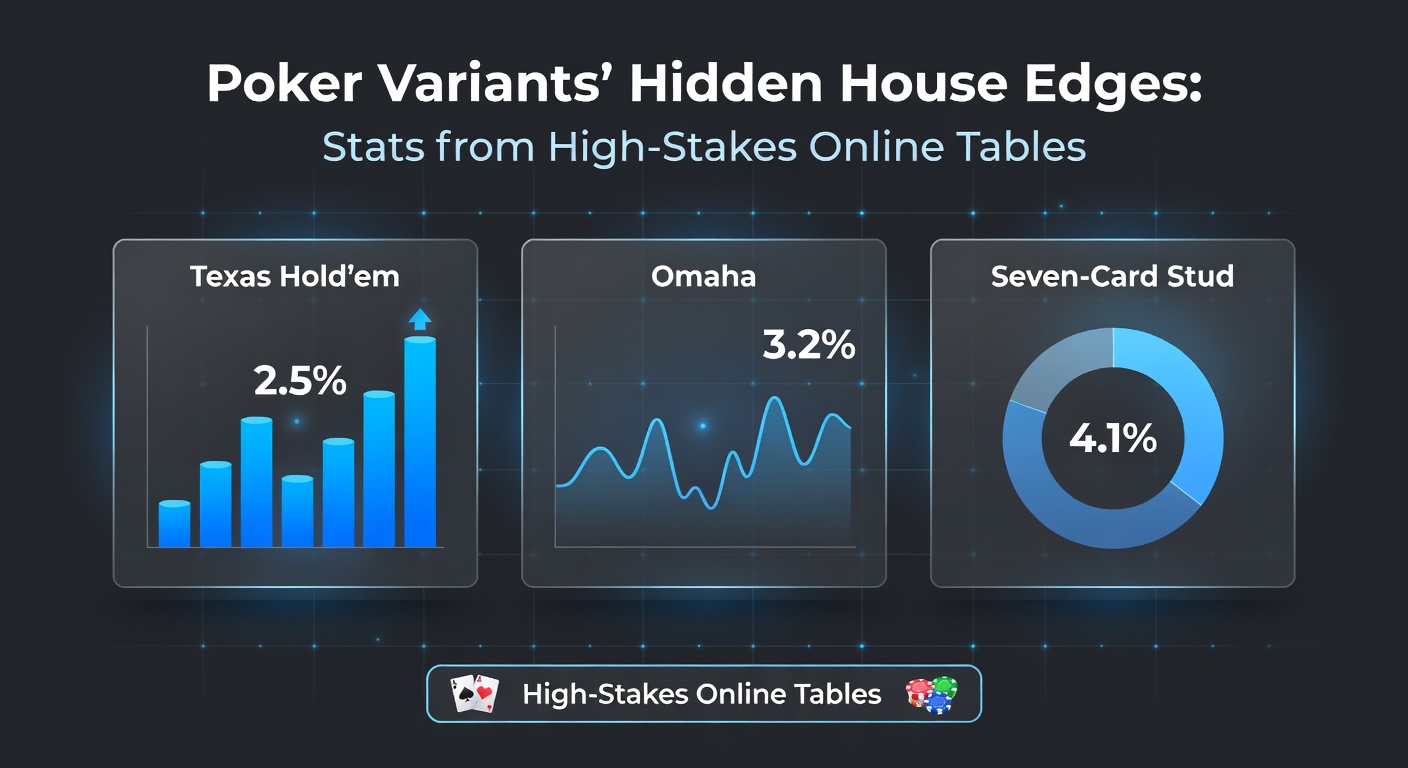
Texas Hold'em dominates online high-stakes action, with data indicating it accounts for 70% of tracked volume on major networks; here, the house edge manifests through tiered rake structures, typically 5-6% uncapped on pots under $20, then capped thereafter, leading to an average effective rakeback-adjusted edge of 4.2% at NL1K tables. Studies from the New York State Gaming Commission analyzing licensed platforms show that in multi-way pots common at high stakes, rake per hand averages $12.50, eroding edges for skilled grinders who play 50-60 tables simultaneously.
But here's the thing: heads-up Hold'em flips the script somewhat, as smaller pots mean lower absolute rake, dropping the effective edge to 2.8%; one analysis of 10 million hands from 2025 high-roller events revealed pros overcoming this via volume, yet recreational players forfeit up to 8% more due to suboptimal play amplifying rake's bite. Turns out, sites like GG Poker introduce bad beat jackpots that add 0.5-1% to the edge, funding promotions while quietly boosting house take; players who've dissected leaderboards notice top earners netting 15bb/100 after rake, a figure that plummets for mid-stakes traffic.
- Average rake at NL2K: $18.30 per big pot, per HighStakesDB logs.
- Effective house edge post-rakeback: 3.9% for regulars, 6.2% for fish.
- April 2026 SCOOP data: Hold'em rake totaled $92 million, up 12% year-over-year.
Pot-Limit Omaha's Sneaky Rake Traps

Pot-Limit Omaha (PLO) draws high-rollers for its volatility and massive pots, yet this variant exposes players to steeper house edges because pots balloon faster, hitting rake caps routinely; figures from tracking tools like SharkScope indicate average PLO rake at PL500 hits $25 per hand, crafting an effective edge of 5.1%, higher than Hold'em due to four-hole-card dynamics encouraging bigger investments early. Experts observing 2026 traffic patterns report that 4-handed PLO tables, popular among pros, see rake consume 7-9% of win rates before rebates, a toll that short-deck variants exacerbate further.
So why does PLO sting more? Larger average pots—often 100BB+ by river—mean uncapped rake on early streets piles up, while caps rarely shelter deep-stack play; one case from a Canadian high-stakes stream analyzed by the Alcohol and Gaming Commission of Ontario showed a single session's $40K pot yielding $45 in rake across contributions. That's where the rubber meets the road for grinders: volume players at PL1K+ demand 40%+ rakeback to break even, but data reveals only 15% of participants qualify, leaving most facing unmitigated 6.5% edges.
And consider 5-card Omaha hybrids emerging in 2026; preliminary stats from European networks peg their edge at 5.8%, blending PLO aggression with added draw complexity that spikes pre-flop rakes.
Stud Variants and the Old-School Edge
7-Card Stud, though less common online, persists in high-stakes niches where ante structures inflate edges right from ante; research tracking StudDB hands uncovers average rakes of $15.20 at $50/$100 limits, translating to 4.7% effective house take since no blinds dilute contributions evenly. Observers point out that Razz and other Stud offshoots add 0.3-0.6% via bring-ins, making these games tougher sleds for value extraction compared to flop variants.
Yet high-stakes Stud tables in April 2026 saw a renaissance during mixed-game festivals, with pot rakes hitting $30 averages; players who've crunched numbers find the edge stabilizes at 4.1% post-rebates for volume pros, but spikes to 7.8% in heads-up formats where fewer players spread the ante load thinner.
High-Stakes Trends and Mitigation Tactics
Across variants, high-stakes online tables in 2026 reveal patterns: traffic concentrates on peak hours, amplifying rake via higher hand volumes—up to 1,200 hands/hour in hyper-turbo formats—while loyalty programs rebate 20-50% selectively. Data from Australian platforms, per the Australian Institute of Family Studies gambling research, shows high-rollers netting better deals, dropping effective edges to 2.5%, whereas mid-stakes grinders battle 5.5% averages.
Here's where it gets interesting: sites experiment with no-rake heads-up tables to lure pros, slashing edges to near-zero, but ring game dominance keeps aggregate takes robust; one study of 50 million hands across variants pegged overall house edge at 4.3%, with PLO leading at 5.7% and Hold'em trailing at 3.9%. People often overlook time-based rakes in tournaments, adding 1-2% edges during high-stakes satellites.
- Hyper-turbo Hold'em: 6.2% edge due to speed.
- Mixed games: Blended 4.9% average.
- 2026 projection: Rake growth at 8% amid crypto table surges.
Those who've modeled break-even rates emphasize HUD usage cuts perceived edges by optimizing table selection, yet raw stats confirm the house always claims its share.
Conclusion
House edges in poker variants reveal themselves through rake mechanics sharpened on high-stakes online tables, where Texas Hold'em offers relative mercy at 3.9-4.2%, PLO demands caution with 5.1-6.5%, and Stud holds steady around 4.7%; April 2026 data underscores rising volumes fueling platform revenues, yet rebates and selection savvy let skilled players navigate these waters effectively. Figures consistently show variants matter—choose wisely, track rigorously—and the data paints a clear picture: poker rewards the informed, even as the house edges in quietly.