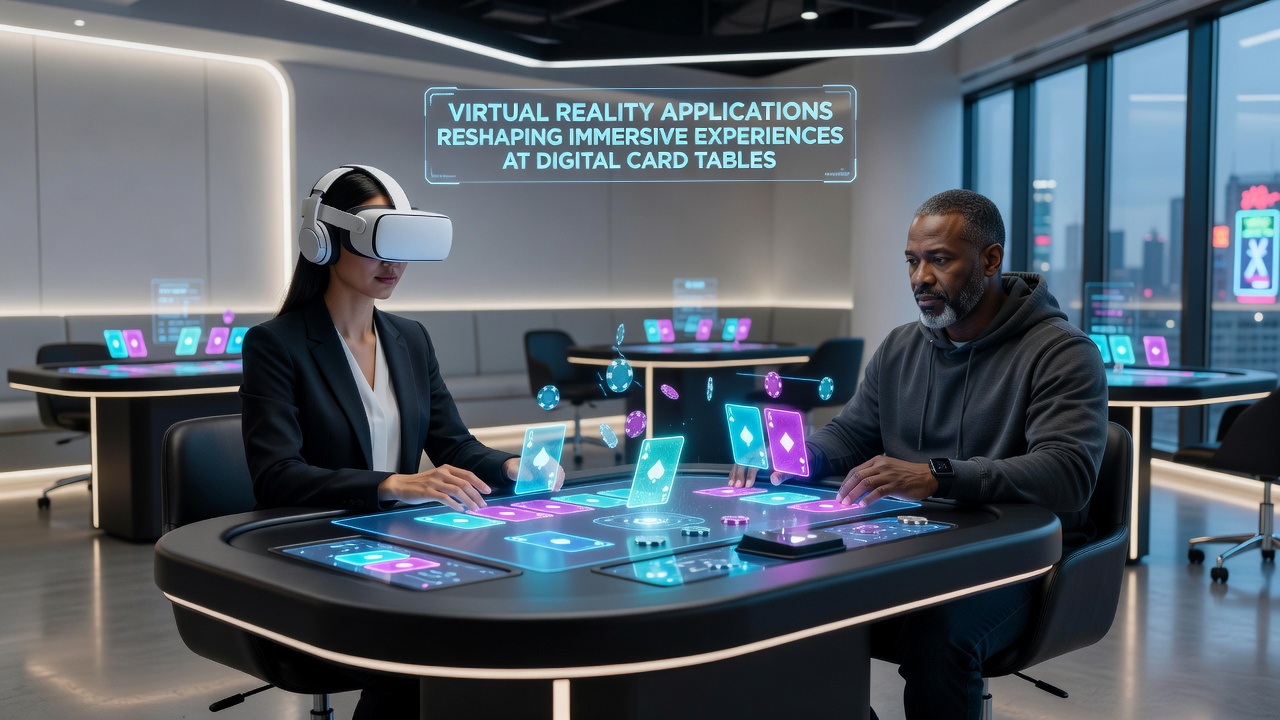
Virtual Reality Enhances Digital Card Table Dynamics
Virtual reality applications continue to expand the boundaries of digital card tables, where players engage in poker, blackjack, and other table games through headsets that simulate physical presence. Data from industry reports indicate that VR integrations have increased user session durations by integrating spatial audio, gesture recognition, and realistic physics engines into online platforms, while developers focus on replicating the sensory details of traditional casino environments without requiring physical travel.
Core Technologies Driving VR Card Experiences
Hardware advancements from companies like Meta and HTC provide the foundation for these experiences, as headsets deliver 4K resolution per eye and refresh rates above 90Hz to reduce motion sickness during extended play. Software layers add hand-tracking capabilities that allow users to manipulate virtual chips and cards with natural movements, and developers incorporate haptic feedback vests or gloves to convey the weight of stacks or the shuffle of decks. Research conducted at institutions such as the University of Southern California demonstrates that these combined elements improve spatial awareness and decision-making accuracy compared to standard 2D interfaces.
Network infrastructure supports synchronized multiplayer sessions across continents, with latency reductions achieved through edge computing and 5G connectivity. Platforms distribute processing loads so that each participant experiences consistent timing during bets and reveals, which maintains game integrity while scaling to dozens of simultaneous tables.
Immersion Features at Digital Tables
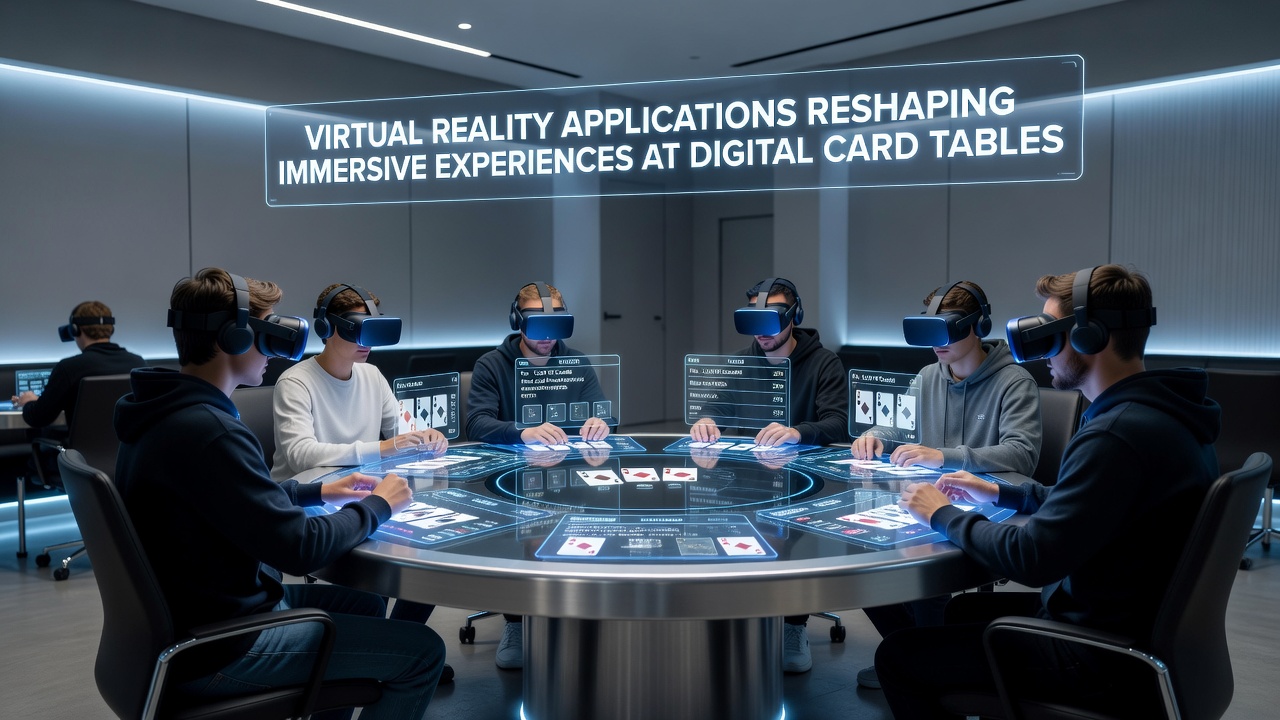
Avatars in VR card environments reflect player movements in real time, complete with facial expressions captured via headset cameras and body language that signals confidence or hesitation. Environmental details include adjustable lighting, background chatter calibrated to crowd density, and dynamic weather effects that shift based on game progression, all of which contribute to sustained engagement. Observers note that these elements recreate the social atmosphere of physical card rooms more closely than previous digital formats.
Dealers appear as animated figures who respond to voice commands and maintain consistent pacing, while side panels display statistics such as pot odds and hand histories without breaking immersion. Players who participate in tournaments report that VR reduces distractions common in browser-based versions, allowing focus on opponents' virtual tells.
Regulatory and Safety Considerations
Authorities in regions including Nevada and New Jersey have begun evaluating VR card platforms under existing online gaming frameworks, with emphasis on age verification through biometric checks and secure wallet integrations. Figures released by the Nevada Gaming Control Board show steady growth in licensed VR deployments since 2024, driven by compliance with data protection standards that encrypt player movements and transaction logs.
Academic studies from Canadian universities highlight potential health aspects, such as eye strain during long sessions and the need for posture guidelines, prompting developers to include built-in break reminders and adjustable field-of-view settings. These measures align with broader industry efforts to balance immersion with user well-being.
Market Trends and July 2026 Projections
Market analyses project that VR card table adoption will reach several million active users globally by July 2026, supported by declining headset prices and expanded content libraries. Partnerships between game studios and hardware manufacturers accelerate feature rollouts, including cross-platform compatibility that lets users transition between desktop and mobile VR setups seamlessly.
What's interesting is how regional variations influence development, with European operators prioritizing multilingual support and Australian platforms emphasizing high-stakes tournament formats. Data indicates that retention rates improve when social features such as private table creation and spectator modes are included.
Conclusion
Virtual reality continues to integrate deeper into digital card table ecosystems through hardware refinements, software innovations, and regulatory adaptations. The combination of realistic interactions and scalable multiplayer systems positions these applications to expand further, as evidenced by ongoing research and deployment statistics across multiple jurisdictions.